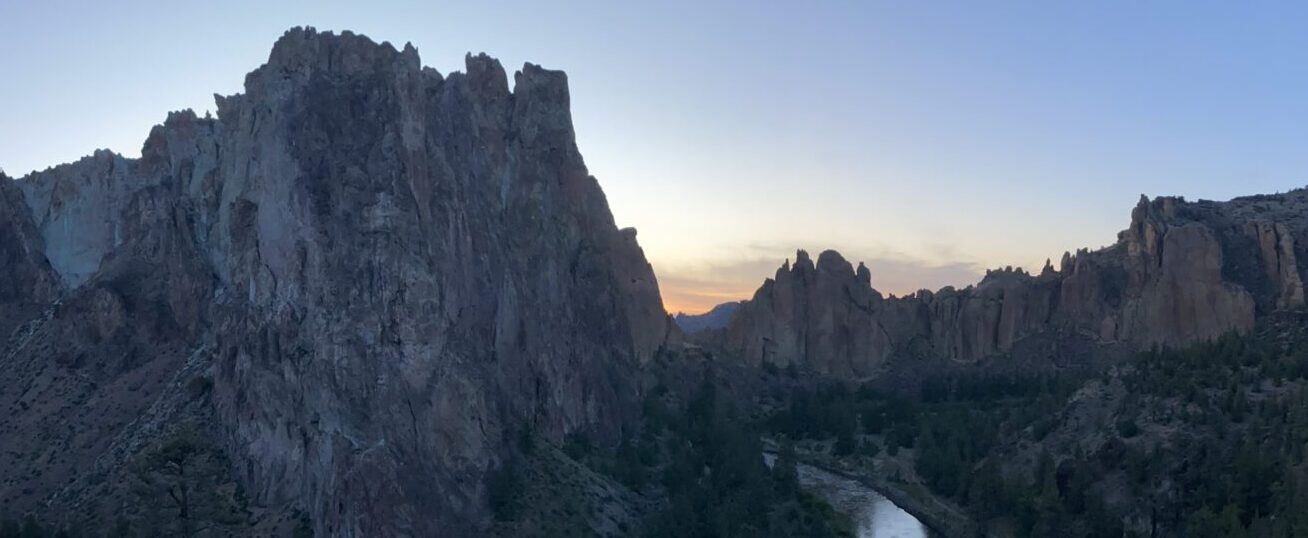
You’ve known it since the beginning: the River Gorge Guild is a family of sport climbers. Our roots are in the Red River Gorge, and we’ve built our lives around spending seasons all the best sport crags in the U.S. Not to mention, trad climbing is scary, dangerous, expensive, and demands a wise mentor to help you find your way. Why, then, are we so eager to learn trad this fall and spring? And is this article a sign that you, too, should learn?
Read on for our personal reasoning, and see if it resonates with you.
…we went to the Tetons.
It’s gotta happen to everybody at some point, and folks, it happened to us. We were planning just to hike, explore, and spot wildlife for a few days, all the while taking a mini-break from climbing. Little did we know, our stoke for climbing would heighten tenfold while in the park…and totally change direction.

When we weren’t out hiking in the sunshine and gaping at the craggy peaks, rainy afternoons drove us into the historic library at the climber’s ranch. There, we spent hours flipping eagerly through worn topos and reading about historic ascents. We were informed by a workstay at the ranch that the antique fireplace still works, and that it regularly houses a healthy blaze on chilly evenings. It was truly inspiring to sense that rich history–not just in the stormy peaks above us, but in the very air around us at base camp, too.


It’s moving to visit any area with such a history of alpine and trad adventure, so you don’t have to go to the Tetons like we did to feel this energy. There are lots of other places with similar stories across the U.S., from Yosemite to Cathedral Ledge.
Access to more routes
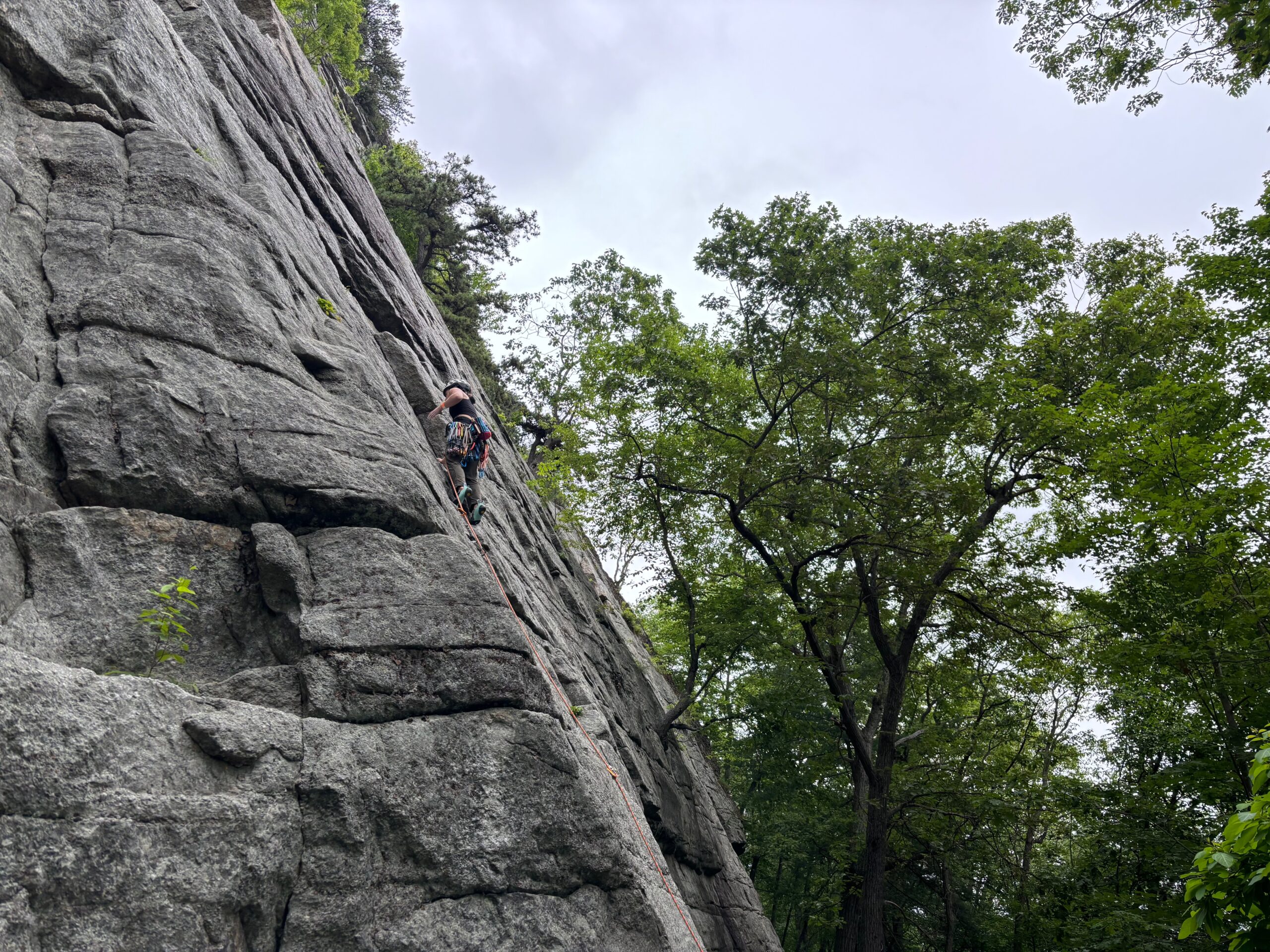
This goes hand-in-hand with our prior list item. There are endless amazing crags out there, and you simply cannot access all of them with just a rope, a rack of quickdraws, and a few lockers. If you want to crush big lines at Squamish, ascend many of the most epic multi-pitches at Red Rocks, or cruise around the Gunks…you need a trad rack and the matching expertise.

A beautiful summer day at the Gunks in 2025
As a magazine that’s designed to help you be a more confident and learned climber, we also owe it to you to learn more about these areas. As we explore the trad routes that Northeast has to offer these coming seasons, we’ll pass any juicy details along!
Skillbuilding and deeper understanding
There are so many different ways to rock climb, and each discipline requires a unique skillset. Regardless of how much experience I have sport climbing, I would never pretend that I know exactly where to stack pads to protect the crux of an outdoor boulder.
Similarly, there’s a host of skills that are necessary to trad climb safely, and eventually alpine climb. This ranges beyond just placing gear and building anchors. Depending on what terrain you’re tackling, this skillset can include a profound understanding of rock and topography, sharp weather instincts, alpine routefinding, and a level of comfort on snow and ice. We’re really looking forward to studying these important fields and deepening our relationship with the mountains.
While you can develop rich rock skills as a sport climber, they’re simply less necessary on bolted faces. That can make it difficult to devote energy to these skills and build them actively.

We learned a lot REAL quick on Pioneer Route last spring…and only half of it is trad!
Life stages conducive to affording gear
Trad and alpine gear is expensive, and you need a lot of it in order to really get out there.
Fortunately, my partner and I live on the road, which has allowed us to skip out on paying monthly rent. We purchased a tiny, used travel trailer last fall, and now only occasionally need to pay for camping stays. Often, we’re able to find work that lets us live on-site for free. This situation allows us to stow away some cash for all the gear we might need.
Knowing whether your stage of life can support your trad journey is actually a really important step–especially so you can be sure not to miss your window. Being in a similar situation to ours (living with family, living at a work-stay, having a job that provides mega prodeals, not having something else to save up for, etc.) can be a sweet opportunity to budget for gear.

Another recommendation I have for you: if you have a job that offers prodeals, a local used gear outlet to peruse, a friend who’s retiring from trad, or anything similar, take advantage of the opportunity. Get your eyes and hands on secondhand gear, or utilize any discounts you might have on new gear. You need a lot of tiny pieces of gear to access this sport, and the prices add up pretty calamitously if you only purchase gear full-price.

The legendary black Totem…apparently, this pre-loved cutie was at IME for less than 24 hours before we noticed it and scooped it up
Access to guiding certifications
Trad skills and experience are more or less required if you want to become an outdoor climbing guide. Even the single-pitch certification, an SPI, has hefty trad prerequisites. If you want an official certification in sharing outdoor climbing with others, trad experience is a must.
It might seem silly at first. Maybe you’re a super experienced sport climber, have taken your friends out many times and set up topropes for them, and even feel comfortable teaching folks how to belay. Fair enough. Like I mentioned earlier, though, there are lots of additional skills you gain as a trad climber, and many of those skills are invaluable in the guiding world. Your ability to equalize anchors and build them extra safely, rappel, and understand rope systems all will improve with each trad pitch you tackle.

The author mock-leading side-by-side with a super cool guide. Photo credit to a dear friend and fellow trad student
As a brief footnote to this section: if you want to take a step into the guiding world but don’t have the time, finances, or interest to build your trad resume, you can always pursue a CWI certification in either lead or toprope disciplines. In fact, this is the certification that I currently hold, and I love it! The certification does not permit you to guide official outdoor trips, but it does allow you to teach indoor belay classes, administer indoor belay exams, and get a huge leg-up in the coaching world.
If you’re looking to take your expertise outside of the climbing gym, though, trad skills are non-negotiable.
The mountains
When you first got into climbing, maybe you came home from an especially high-stoke bouldering sesh and scoured the internet for outdoorsy playlists. Maybe you thrifted that mountain-towny flannel from Depop and started researching AirBnB’s and campsites in the PNW. I know I did. If you did that, too, then you and I both had a bit of an early misunderstanding about sport climbing.

There is no sport route that will get you to the summit of the Grand Teton, as nice as that sounds
While sport climbing is obviously an “outdoorsy” hobby, I quickly found that the best sport crags actually don’t always correspond to the best mountain towns. So many of the places that my heartstrings were tugging me towards didn’t actually have great sport climbing, and so many of the top sport crags are not actually rimmed with snow-capped peaks.
Don’t worry–I still wear my mountain town flannel to all of the greatest sport crags, even in the high desert. And, of course, so many sport climbing destinations that are not right in the mountains or the forest are still profoundly beautiful.

Ever-lovely Wild Iris with sweeping views of the nearby Wind River Range
If you’re truly feeling called to the mountains, though, know that trad and alpine are more likely to take you there, especially if you’re interested in bagging summits.
So, the stoke is there. What do I do about it?
It’s tricky to get into trad climbing, even if you really, really want to. Here are some next steps I highly recommend. All of these steps were recommended to me at some point as well, either by dear friends or trusted guides.
- Go to festivals. Rock festivals host all sorts of goodies that are designed to help you get started. Take advantage of those. Enter the gear raffles. Save up and buy a spot in a clinic. Meet experienced climbers at the socials and ask them to take you out (as long as you know a thing or two and climb proficiently, most people are stoked to have a little buddy). If you’re interested in learning some alpine skills, go to ice festivals, too.
- Seek out used gear (wisely). I wouldn’t recommend getting used soft goods since they’re less durable (e.g., slings), so focus on the hard goods (cams, nuts, axes, etc.). So long as you get your hands on the pieces in person before buying and replace any soft parts (like the sling of a cam), buying used hard goods is a great way to build out your rack.
- Practice on the ground. Tie clove hitches and all sorts of bight knots while you’re watching a movie. Build anchors on the trees in your local park. Find a traversing boulder with some cracks and practice plugging gear two feet off the deck.
- Start small. There’s no need to send it on The Grand tomorrow, or even High E. It’s totally okay to start on single pitches with calm terrain and bolted anchors. Taking these small bites will get you where you need to go.

Practicing knots in the cozy CoHo common room (p.s. when you’re actually out there, always clove yourself into a LOCKER. A LOCKING carabiner. Not a wiregate like this one)
Conclusions
As long as you’re treating your fellows and surroundings with care and respect, then there’s really no wrong way to rock climb. Get out there in whichever way makes the most sense to you.
I invite you also to be open to change and growth. I saw myself purely as a sport climber for many years, convinced that I was too fearful to boulder or, forbid, trad climb. You never know, though, what you might fall in love with next. Find mentors. Ask questions. Try new things. The world is out there, just waiting for you to come join her. Why not?

Leave a Reply