
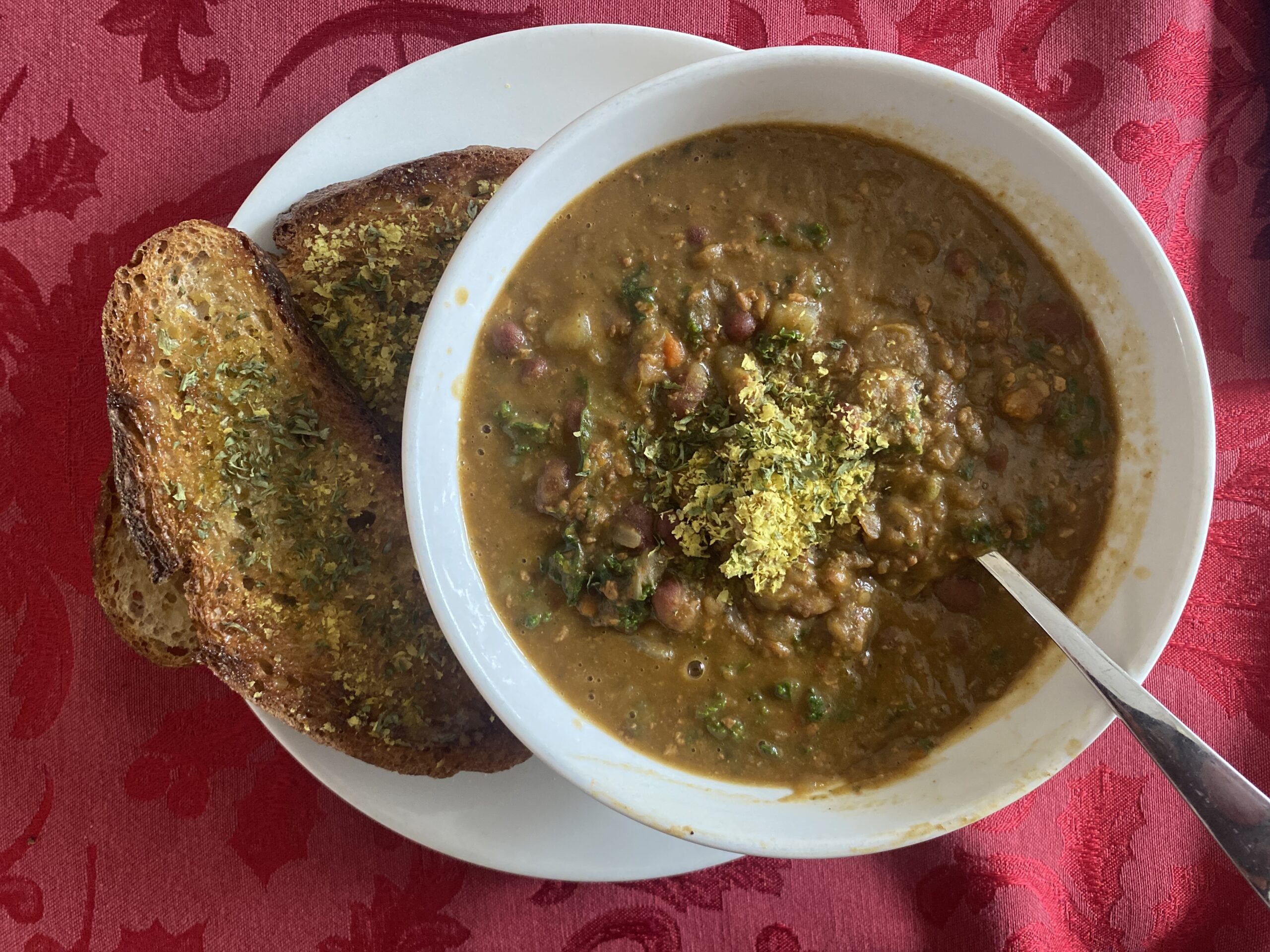
Even with the most beautiful self-built van kitchen, it’s difficult for the foodiest of foodies to maintain our eating standards while on the road. Smaller cooking and storage spaces, time constraints, and remote campsites far from groceries can put a damper on things. The first fall I spent in my trailer, I found a pick-me-up in an unexpected place: canned soup.
There are lots of obvious benefits to using canned soup as a kitchen staple, and one obvious drawback. It’s comforting, easy to prepare, has an incredible shelf life, and can be healthy for your mind and body if you pick the right brand. The drawback? It’s just…not that exciting, especially if you love strong flavors or love to cook. Thankfully, I have a whole pamphlet of solutions for you.
Here are the steps to making your canned soup experience exponentially more pleasant and, dare I say, almost decadent.
p.s. These tips aren’t just for nomads living in cramped spaces. Anyone can have a hard time cooking for any host of reasons, and I hope that this article helps us all.

Vegan grilled cheese bringing some life to a tasty tomato basil soup
Pick a good base soup.
Yes, of course, all soup is good soup. Us soup-lovers know that. However, I do believe that some are better than others (Amy’s makes my favorite canned soup). This is what I usually look for when I’m picking a tasty base of any brand:
Organic (or non-GMO).
If you can afford it, organic soup makes a huge difference in flavor and health benefits. There’s usually a lot of veggies in a good soup, and organic veggies are much better for both you and the environment than non-organic veggies.
Short and simple ingredient list.
I follow the same rule for food as I do for shampoos and soaps: I should be familiar with (or at least able to pronounce) nine out of every ten ingredients, if there are even that many. Some soups have funny artificial flavors or thickening agents that are just plain unnecessary. Call me simple, but I try to stick to uncomplicated soups made of ingredients I recognize.
Balanced.
Your soup doesn’t have to have everything in it right off the bat since you can always add ingredients (we’ll get to that). I usually do, though, try to pick a soup that checks at least a few of my boxes so that I have less work to do later. For me, that means:
- Protein. This is one of the harder food groups to add later, so I usually prioritize it when picking my base soup. I usually look for legumes, quinoa, or fun vegan proteins like soy-based meat replacements or tempeh.
- Carbs. Potatoes, noodles, etc.
- Veggies with vitamins. This often means carrots, broccoli, or rich root vegetables like sweet potatoes and beets.
- Dark leafy greens. Including hometown heroes like kale and spinach. This is the easiest thing to add later, though, so I usually don’t worry too much about it.
Get that soup simmering.
Of course, you can always microwave your canned soup. Like I mentioned in the intro, though, we’re going for decadence. Here are some of my favorite ways to heat up soup extra-deliciously on the road–and don’t forget to stir regularly.

Enjoying peak weather in the Red River Gorge while soup simmers on the camp stove
In a pot on the indoor stove (if you have one).
This is the ideal method for chilly weather, as it will also warm up your van.
In a pot on a camp stove outside.
If you don’t want to introduce extra condensation into your van, don’t have an indoor stovetop, or just want to enjoy some nice weather, heat your soup up outside.
In a mini rice cooker.
Don’t laugh…I’m serious about this one. Mini rice cookers are easy to pack and transport, fairly low-wattage, and are the perfect size to simmer two cans of soup. My partner and I are planning to test this spring whether we can run our own rice cooker off of our new solar panel. We’ll get back to you on that. Otherwise, you can use these things anywhere with an outlet if you’re subtle enough about it.
Add a bunch of stuff.
This is the fun part, and for me it’s where the genuine decadence really enters the scene. This step of the process is the main reason why I don’t recommend using a microwave to warm your soup. It’s much easier to combine, cook, and evenly heat ingredients in a pot than in the micro. Here are some of my favorite canned soup add-ons.
Fresh dark leafy greens.
Spinach and kale take the cake on this one. Just toss several handfuls into your simmering soup, stir it in, and let it wilt over time. Remember that greens always cook down, so add more than you’d think. If you put in too few leaves, they will disappear–I guarantee it.
Spinach mixes in better, while kale will retain a bit of fresh crunch. To fellow vegans and our vegetarian allies: this trick will help you meet your iron quota on the road.
Olive or avocado oil.
This adds some healthy fat to your soup, which is especially important for athletes and other folks who are moving their bodies all day (at work, for example). Olive oil will also make your soup extra rich and add some precious calories.
Cute garnishes.
Add a little extra nutritional yeast right in the center of the bowl, pick two or three leaves from a basil plant, or balance a sprig of rosemary in an appealing spot. If you have access to fresh herbs as a van-lifer (if you work at a restaurant, for example), garnishes can make your meal feel extra-special.
Cooked grains.
Quinoa is my personal favorite grain to add to a broth, and one of my dear friends in college refused to eat any dining hall soups before beefing them up with a serving of rice. Adding a grain, especially a protein-packed one like quinoa or brown rice, gives your bowl an extra nutritional punch and provides some yummy texture.
All the spices you have…
I’m only half-kidding here. I usually add at least six different spices to my canned soups, in addition to salt and pepper. Some of my favorites to add are parsley, basil, oregano, powdered garlic and powdered onion, sage, and red pepper flakes. If I’m seasoning more of a cozy-creamy soup, I’ll choose spices like cumin, paprika, coriander, nutmeg, or cayenne. Really go crazy. In this moment, the only destination on your nomad map is flavor town.
…especially nutritional yeast.
I’m giving this topping its own separate category because it’s an important one, especially for us vegans. Nutritional yeast has a savory, nutty, and cheesy flavor, and is often used as a condiment in place of parmesan and other similar toppings. It can give your soup that tasty umami depth, as well as functioning as a natural thickener if you add enough.
Fortified nutritional yeast can give you a B12 boost, but despite its name, it isn’t a perfect dietary supplement. Don’t expect it to totally replace a multivitamin or other nutrient-rich foods in your diet.
Tack on fun sides.
Any soup can either stand alone or with a friend. Here are some of my favorite sides that are fairly van-life friendly:
Fresh bread.
Simple, classy, and ancient. Bread and soup go together like nothing else (except perhaps bread and butter). If you don’t have a fridge for storing butter, you can use olive oil and salt as a substitute–I learned this the fun way while living in Spain for a summer. My favorite additional bread topping lately has been a sprinkle of nutritional yeast and parsely.
Vegan grilled cheese.
This one is a little tougher since you’ll have to have a way to store vegan cheese. Not all nomads have access to a fridge, be it public or their own. If you do have a fridge–or the time to make this meal the same day that you acquire the cheese–, then I highly recommend it as a side to soup. Vegan grilled cheese can be augmented by adding vegan butter or mayo, a juicy slice of heirloom tomato, rich greens, or some seasoning (salt, pepper, oregano, etc.).
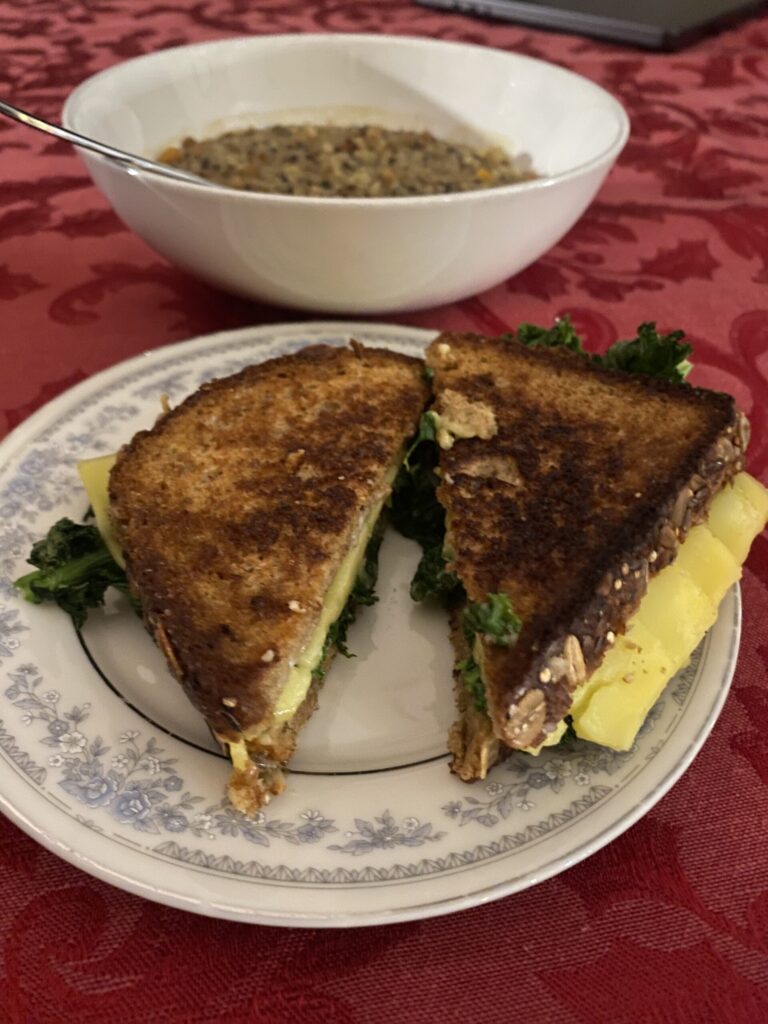
Vegan grilled cheese with some curly kale providing company for my canned-lentil-soup-plus-leftover-quinoa. Chao Creamery makes the best vegan cheese for melting, but Violife is also a great (and more affordable) option
Chips.
Pita chips, potato chips, blue corn chips…there are infinite options out there, and almost all of them are both shelf-stable and good with soup. These truffle oil chips are my all-time favorite. This chip brand isn’t ecologically perfect, but most of their products are vegan and non-GMO, and they’ve made notable efforts to reduce their packaging.
Conclusions
Cooking doesn’t have to be totally from scratch to be delicious and healthy. If you know that you have busy days ahead of you or just need to stock your cabinets with good food that won’t expire in a hurry, I’ve found that canned soup is always a better-than-expected fallback. Have fun with it, get creative, and most of all, enjoy.
We hope all of our northeasterneres are staying warm out there and making the most of this historic snowfall!



Leave a Reply