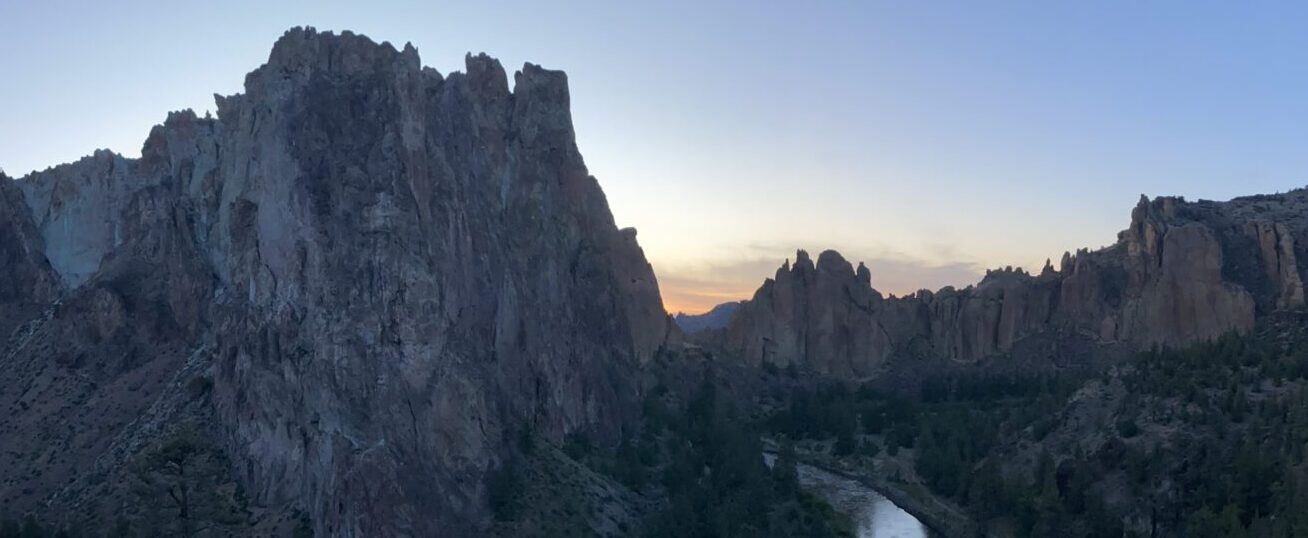

Like many sports, climbing bestows various advantages and disadvantages upon every body type. We humans are empathetic and naturally social creatures, so we can often (at least vaguely) imagine what it might be like to live in someone else’s body.
As an extremely short athlete, though, I often find that it takes a special kind of vocabulary to explain what rock climbing is like for me. Read on for some helpful strategies in building empathy between you and your taller companions. Of course, always be ready to listen to their personal experiences as well!
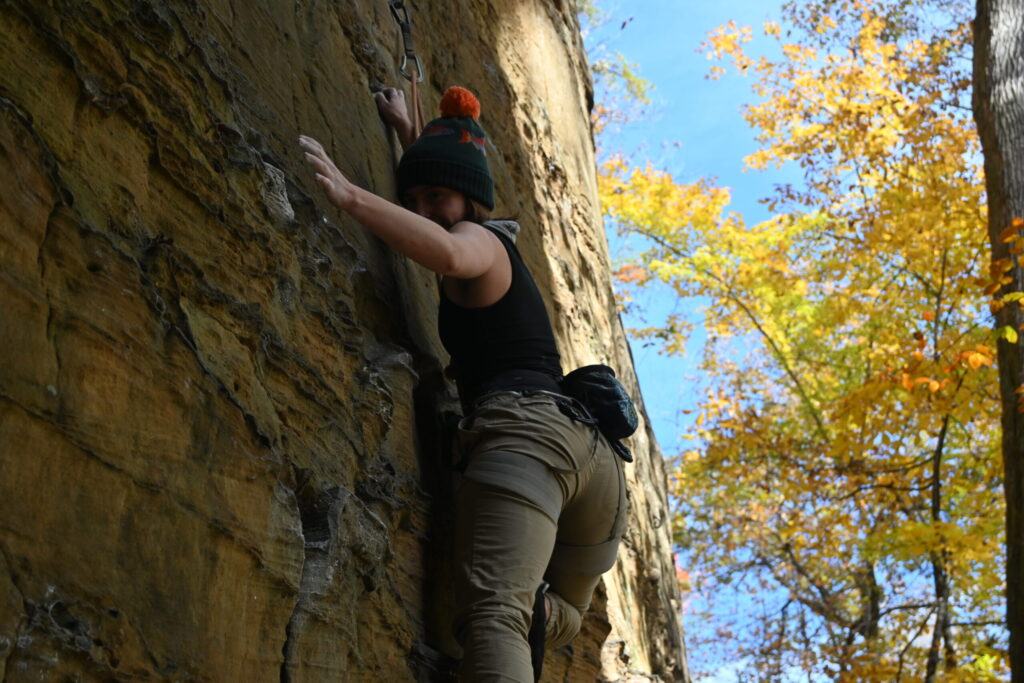
**My best friend Bailey took the super ill cover photo of this article: me chilling on 10a Brown-Eyed Girl
The Elbow Trick
This trick evolved from the routesetting world, and it is often used by tall routesetters to visualize how shorter climbers might ascend their routes (or break their beta). Tell your tall friends: “if you can’t reach that hold with your elbow, I can’t reach it at all, and I will have to use different beta.” This is generally true of climbers with a differential of eight inches or more.
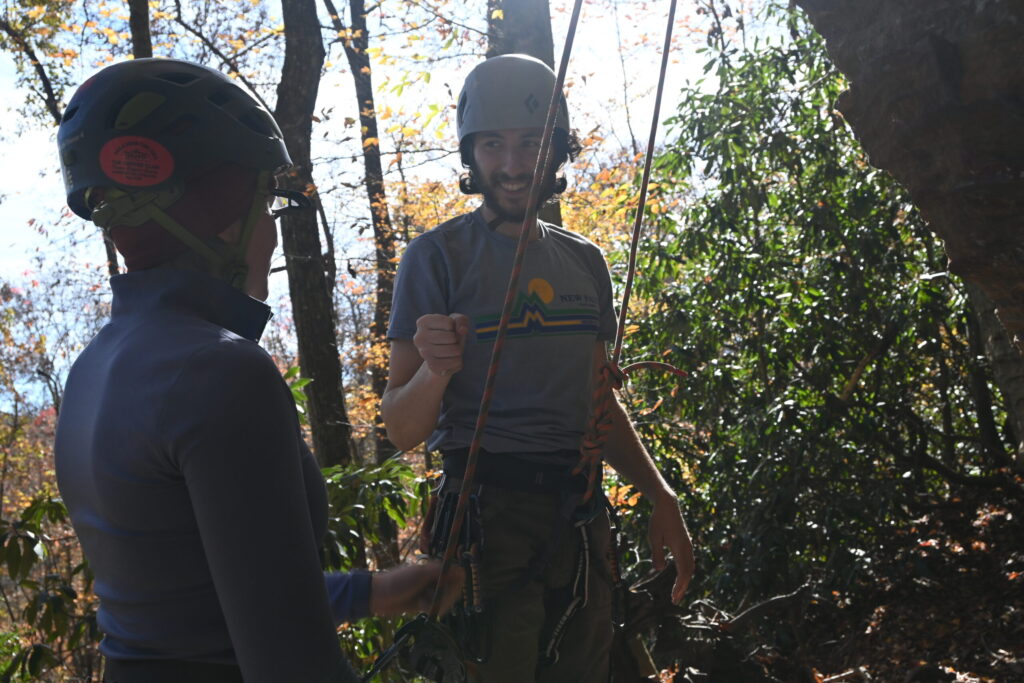
My partner Tomo and his belayer, Bailey (my best bud)
Grade comparisons and emphasis on grade subjectivity
This takes some skill and experience to do, but I find that it’s very helpful for nurturing understanding between body types. Often, short climbers must tackle cruxes with entirely different beta from their taller companions. If your taller belayer doesn’t understand why you’re so stuck at a given crux, try your best to explain the grade of the sequence that you must do to bypass the crux.
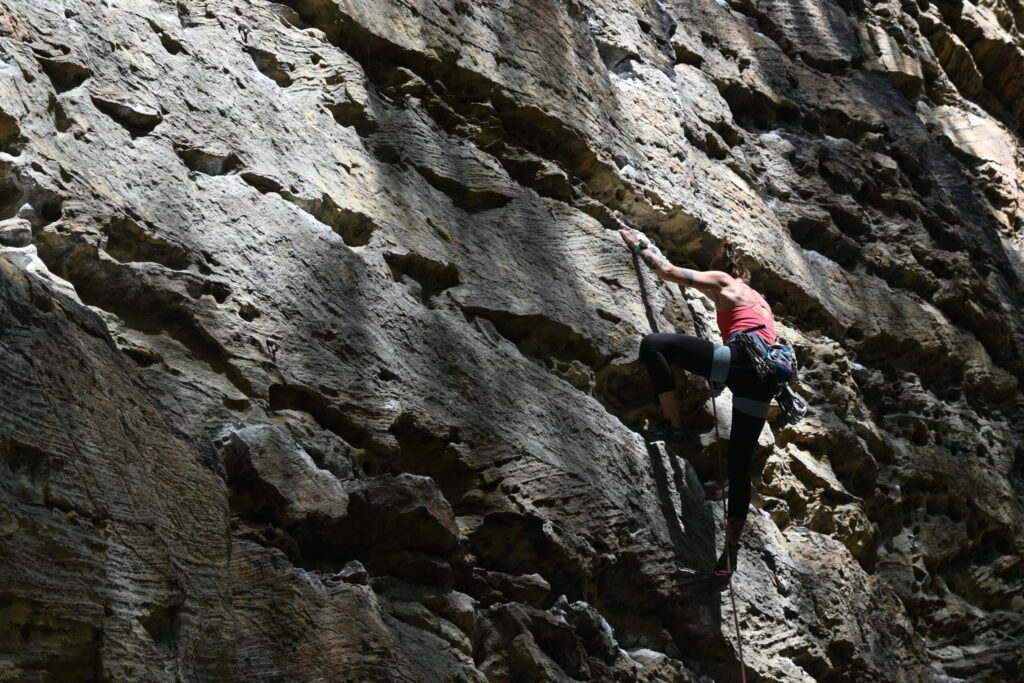
My dear friend Jess having the reverse effect on this 11b/c (being so strong that she climbs it like a 10c)
For example, let’s say that the crux of an otherwise-calm 10a route is a very long reach between good jugs that, for most climbers in the Mountain Project comments, is reportedly 10b in difficulty. A short climber might not be able to make the reach, instead using intermediate crimps that can only be pulled on by a climber with 10c strength. Attempting to explain this difference to your belayer, as well as explaining why a given sequence clocks in at a different grade for your height, can be illuminating.
Visual beta comparisons
This works best for boulders and the beginnings of sport routes, since these cases allow your audience to closely observe your climbing. Have a taller climber ascend the route first, and ask them to remember their beta. Then, demonstrate why it might not be possible for you to use the same beta, and complete the route with your own beta instead. Having this visual can pair well with the semantic and theoretical power of #2.
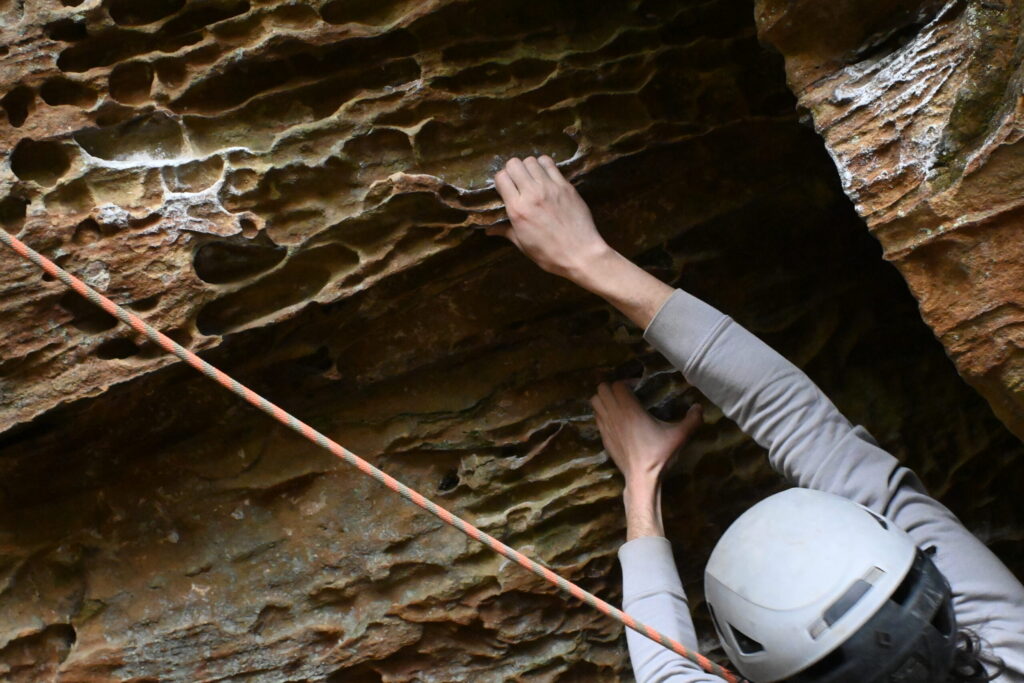
Tomo pulling on the beginning of an 11a at Infirmary
“If I was, seriously, 5’4″, I would be able to reach that rail”
This goes hand-in-hand with the previous strategy: estimate what minimum height you would have to be in order to use your friends’ beta and explain this to them. At times, it’s much less dramatic than they might expect. All too often I hear that “well, yeah, only super tall people can skip that sequence though,” when in actuality, I (at 4’11″) might only be a couple of inches from much easier beta.
Me reaching for (or from?) a crimp while cleaning Brown-Eyed Girl for my party (Bailey snapped this beautiful action shot)
Count your moves
This one can be made into a fun game: count how many moves it takes you to complete a crux sequence and compare with taller climbers.
Comparison of hip height
This one is usually a shocker for people, and it helps to explain one of the sneakier nemeses of short climbers: being forced to smear because the good feet are out of reach. Lack of reach when going for handholds is often blamed for the difficulties of a smaller stature, even by short climbers themselves. However, I’ve noticed that finding feet is often just as difficult, if not more so.
To explain this phenomenon to a taller climber (or even to yourself), stand next to a climber who is taller than you and compare your hip-height. The height at which your pelvis lies on a vertical axis limits how high on the wall you can put your feet. This is, at least partially, why short climbers benefit so much from physical flexibility and from beta creativity.
“Can we hang/clip the draw from the same stance?”
This one is an excellent visual that, I’ve found, is fairly easy for anyone to understand. Complete the same climb with a large group of people and compare your clipping stances. Often, these stances will be entirely different as a function of physical stature, especially as you and your friends venture into more difficult sport routes.
Hanging the draws and clipping them both highlight very specific moments in a route, allowing for a comparison of precise beta snapshots rather than attempting to compare the lengthier experience of completing a whole route.
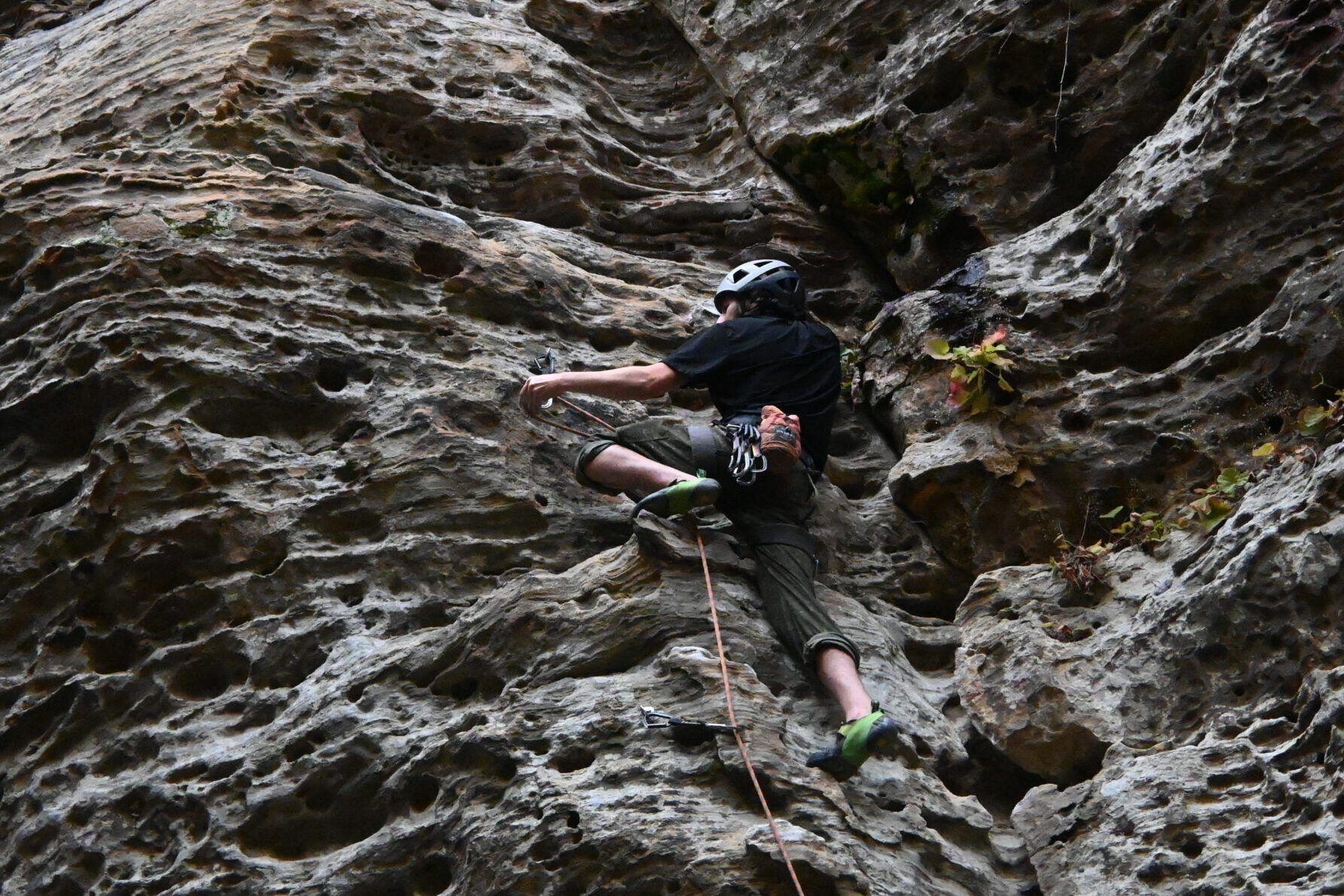
Tomo clipping
Conclusions
Of course, none of these listed strategies are excuses, or even limitations. With enough hard work, creativity, and physical strength, climbers of any stature can achieve even their loftiest goals. However, it can be exhausting to prove that all of that hard work is really necessary and that you can’t “just reach the jug.”
Hopefully, this guide can provide my shorter readers with some simple, non-dramatic methods for requesting deeper empathy from your climbing partners, as well as helping you understand your own body type better.
For my taller readers: we’re aware that your height is not a get-out-of-jail-free card and that you have to be super strong, too. We have no envy of your experience with sit starts and small boxes, we love you, and may your back and forearms be huge.
Be well everyone, and no matter what, love your body at the end of the day. It does so much for you!
Leave a Reply