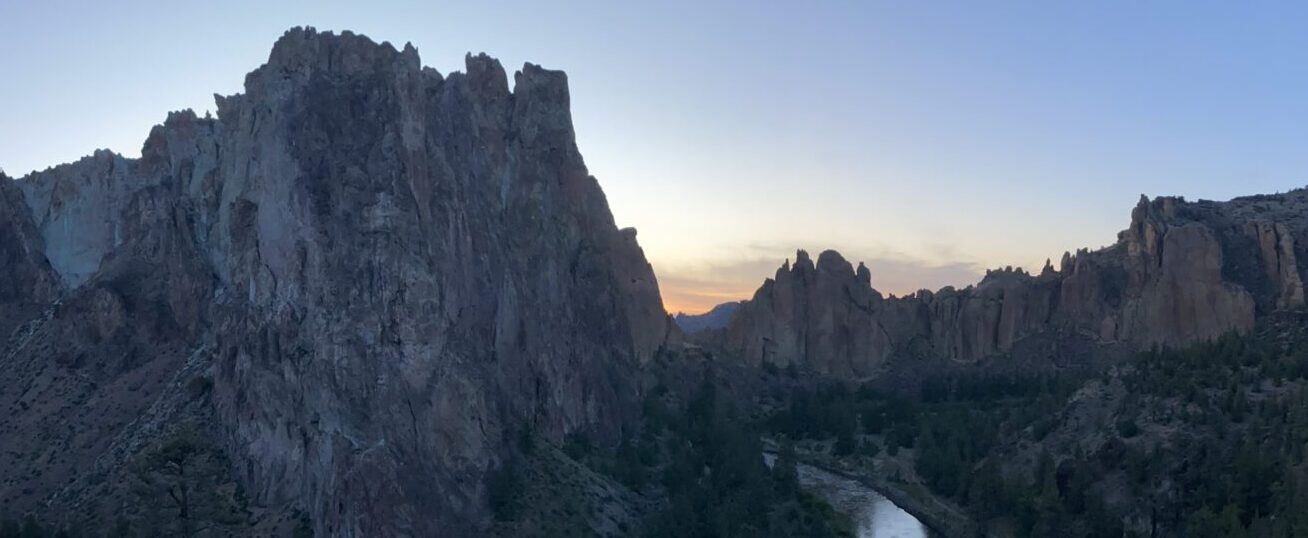
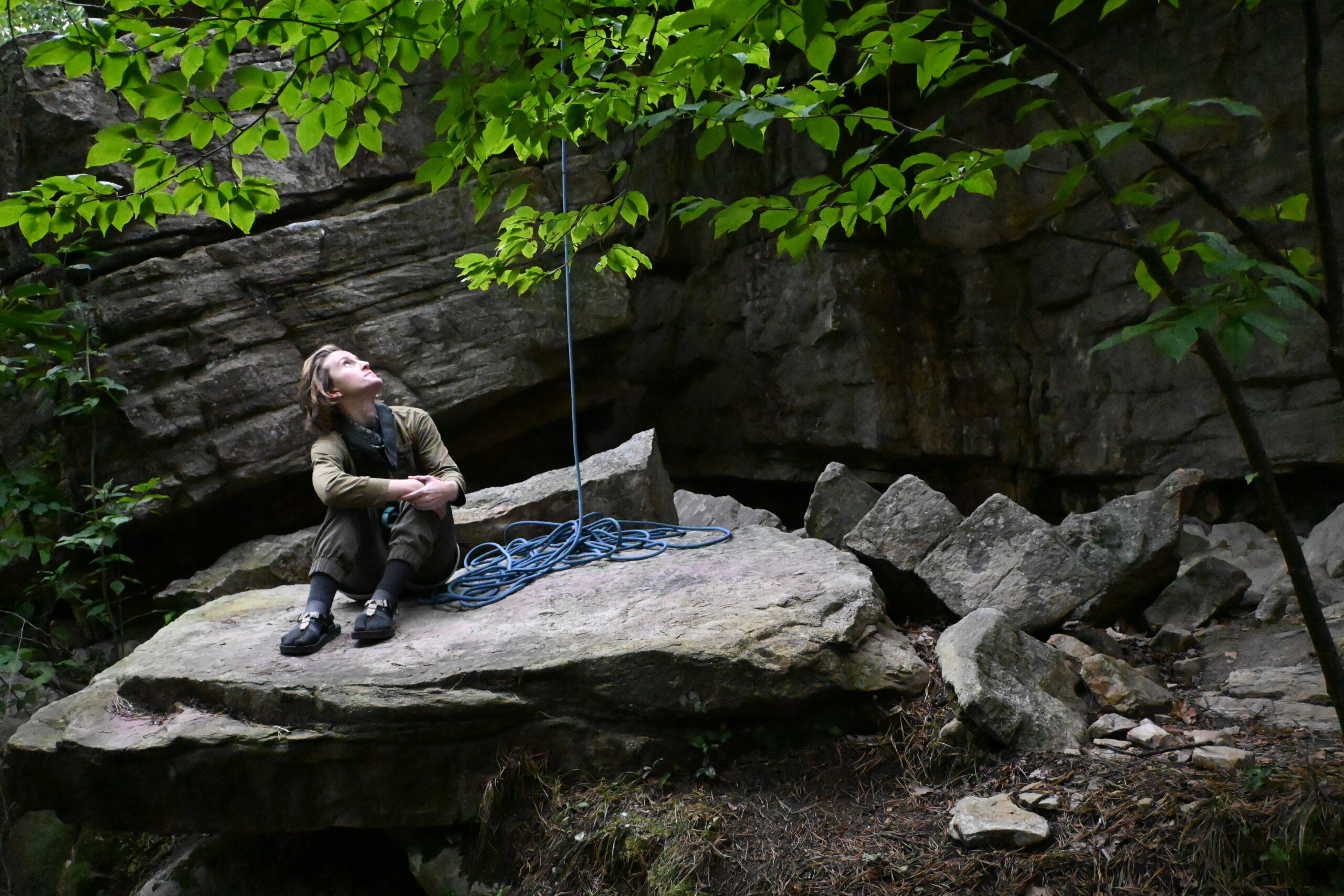
Everyone’s feet are different. Some of us have dogs that are just meant to be out. We have an affection for hiking sandals here in the River Gorge Guild, and I’ve compiled nine reasons why I recommend them to everyone I know.
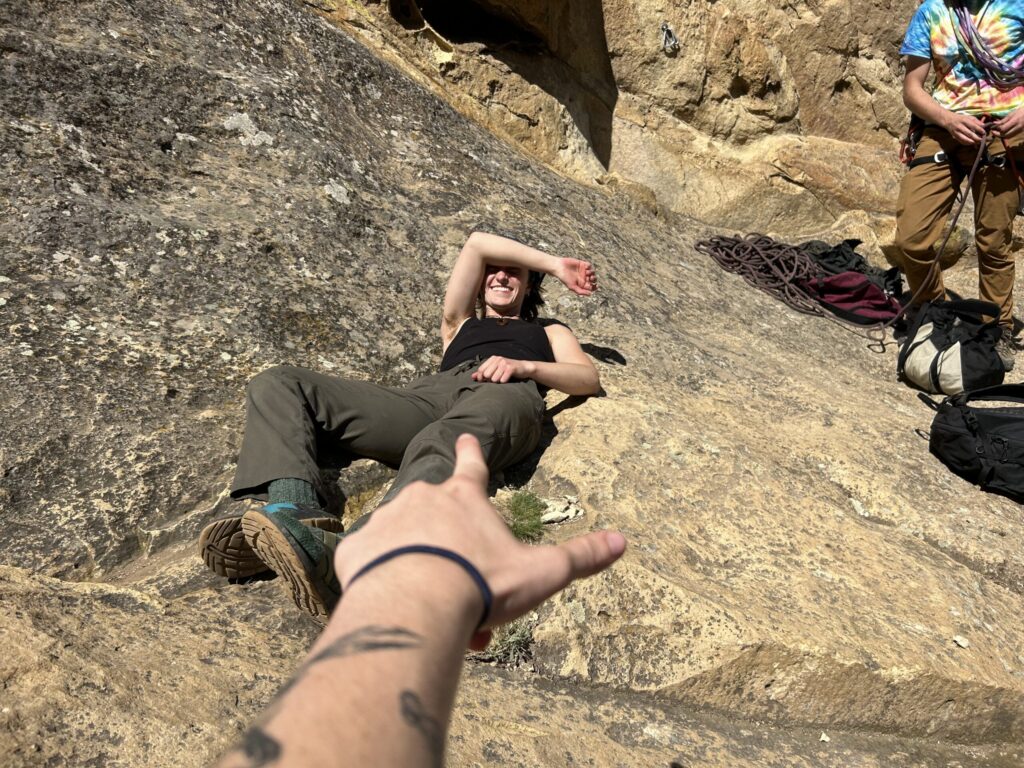
My friend Charlie pointing at me and my sandals (for unknowable reasons) before we commenced a multi-pitch out in Smith Rock
It is important to note, of course, that there are some situations in which sandals are not your best friend. Take care if you are carrying a very heavy pack, have weaker ankles, or will be in an unsuitable environment (mostly in terms of dangerous flora or fauna). In almost all other cases, though, follow your heart.
Won’t cut your circulation off in chilly weather
An insider truth from my snowboarding childhood: if you wear thick socks with heavy shoes or boots, your toes might end up going numb. Closed-toe shoes can squeeze your feet, shutting down critical capillaries. If you’re in a situation where you must wear closed-toe shoes, you can always wear thinner socks, but there’s another solution, too.
The joy of wearing sandals is that you can don your fluffiest socks and still have total mobility and full bloodlfow to your toes. I’ve enjoyed chilly Red Rock Canyon nights equipped with just my Chacos and a pair of thick socks.
Take caution in snow, of course–if dampness is coming from outside elements and not from your own sweaty feet, then sandals will not keep you dry!
Great for your feet (in unique ways)
Since shoes are made for humans and by humans, most types of outdoor or performance shoes have some benefit for your foot health. Hoka’s sneakers, for instance, are famously cited for their cushioning effects and shock absorption.
Sandals, however, have some unique properties that you would be hard-pressed to find in any other kind of shoe.
Firstly, the breathability of sandals is unmatched, and I find that my feet are far drier and less blister-prone in sandals. I hiked Lafayette Ridge in July 2025 with stifling hiking boots, and I came away with sore feet and numerous blisters. When I summited Agiocochook (Mount Washington) just a few days later in sandals, my feet were totally happy and healthy.
Hiking in sandals, like barefoot running, can also strengthen the tiny muscles that support your arches and encourage you to use your feet more naturally. Thru hiking in minimalist shoes is increasing in popularity for similar reasons.
There isn’t enough peer reviewed research about this tiny field of adventurers to make any hard-and-fast medical claims. There are, though, plenty of small studies and first-hand accounts out there. Many hikers and podiatrists note the injury-reductive properties of minimalist shoes, as well as their potential to strengthen your feet.
Most hikers and doctors recommend easing into trekking around in sandals, starting with lower mileage on soft surfaces and working your way up to big adventures.
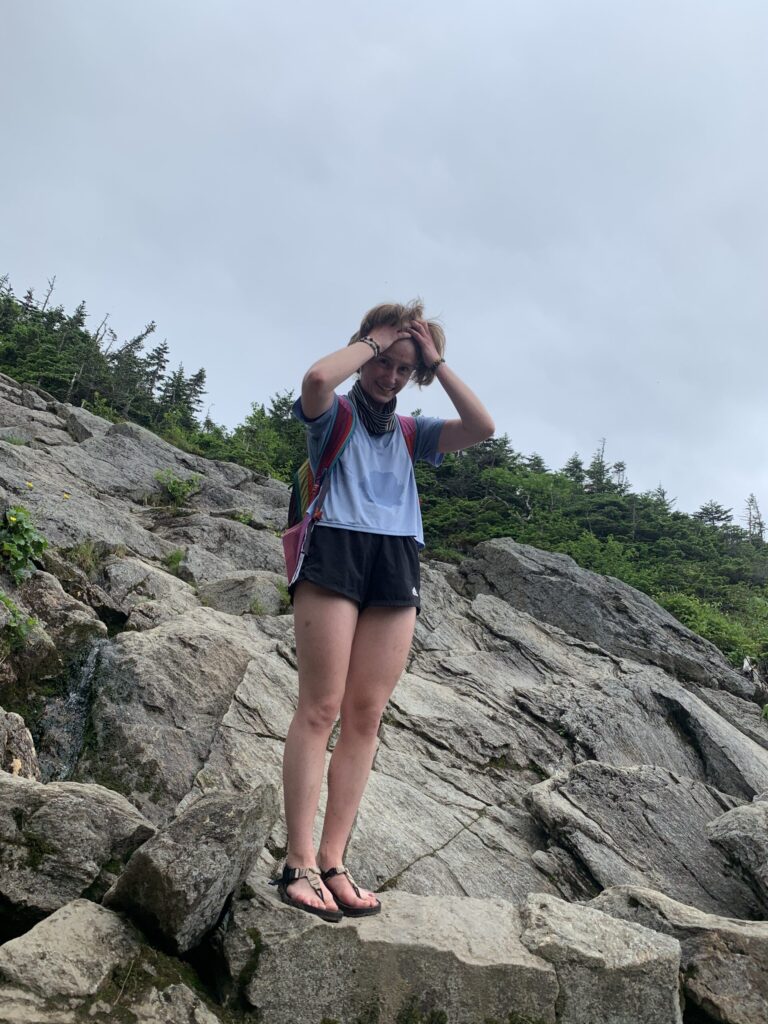
Me, very sweaty and on the face of Agiocochook (Mount Washington) in my Bedrock sandals
Highly adjustable fit
As a fairly little guy who stands at less than five feet tall, I’ve always had some frustration finding both shoes and clothes that fit me. Sandals, though, are some of the most adjustable footwear out there–especially sandals designed for hiking.
The strappy nature of sandals allows you to loosen and tighten specific parts of the shoe without wholly sizing up or down. For instance, let’s say your shoe fits perfectly but has too much space in the heel. If that shoe is a sandal, you can often tighten just the heel strap without adjusting anything else. Isn’t that nifty?
Bedrock sandals, pictured many times in this article, have some of my favorite adjustable straps.
Connect with the earth
Whether this is a pro or a con of sandals depends on who you ask, but I personally like it a lot. Hiking boots (and even trail runners) put up stiff boundaries between your feet and the world around you. This can be a good thing, especially if you’re hiking somewhere with dangerous ground fauna or particularly pointy sticks and rocks.
In most cases, though, I find that letting my feet breathe is grounding and allows me to experience nature more completely and organically. Animals don’t wear shoes, and I feel a little bit more like them when I choose footwear that exposes my feet to the elements.
Sandals also allow me to feel the trail better beneath my feet. This has added tiny nuances to the way I balance on narrow or slippery footing, how I place my feet on rock scrambles, and how I interact with various kinds of terrain. Stream crossings are much less intimidating in sandals, and I’ll rock-hop fearlessly across rather than eyeing out only the very driest landing pads.
I also have discovered that light sandals can reduce my impact on trails, too, even if just minimally. I’m less likely to beat off the trail or kick rocks when my toes are exposed, as I generally am much more mindful of where I put my feet.
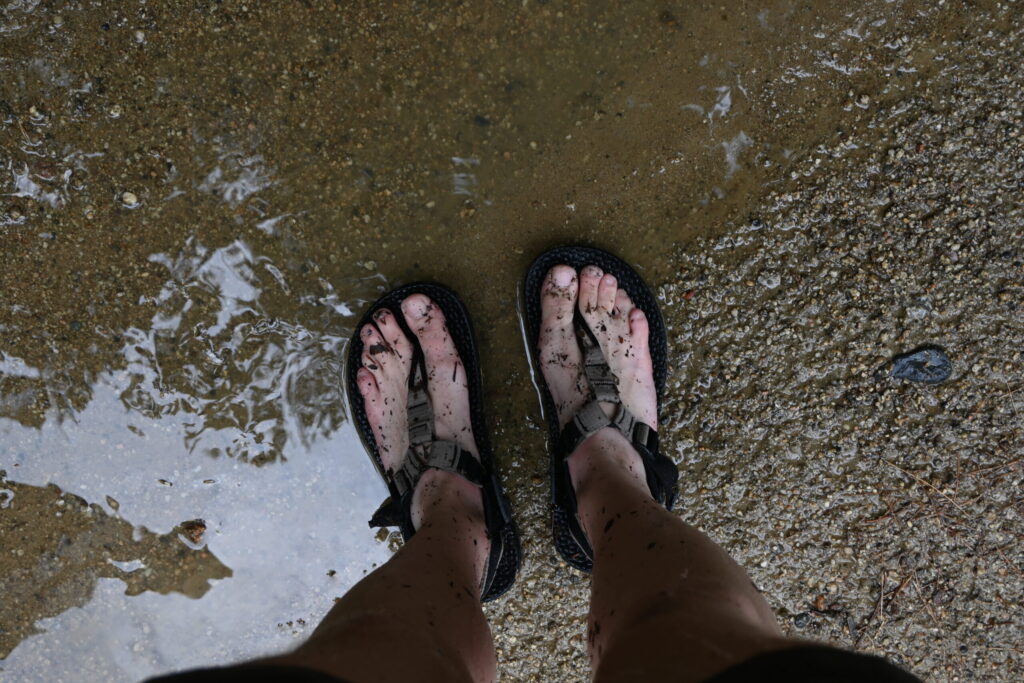
Me after descending rapidly from Moat Mountain in a thunderstorm. My Bedrock sandals carried me out safely, even though I was running at top-speed the whole way
An act of resistance
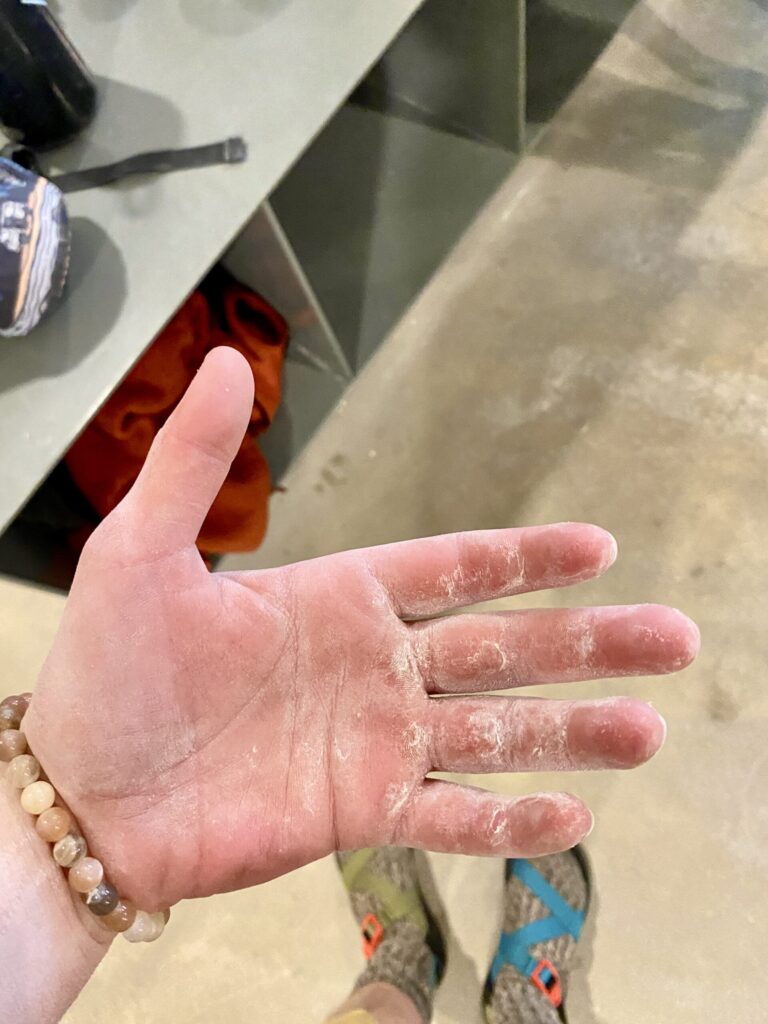
Me enjoying my Chacos and some cozy socks after a long indoor bouldering session in Salt Lake City
1.
In a world where expensive approach shoes, hiking boots, and trail runners dominate the approach scene, even high-end hiking sandals are often much cheaper than their closed-toe counterparts. The minimalist construction of sandals compared to other shoes, in many cases, results in them being more affordable. The Man will tell you that you need the finest La Sportiva approachies if you want to get to the crag safely and in style. Truth is, you can hike wearing pretty much anything, as long as you watch your step.
2.
Although the base of sandal-lovers in the world is certainly growing, there still aren’t very many of us that keep the dogs out once we enter the wild. People have certain expectations of outdoor footwear, in terms of both fashion and comfort. I can’t tell you how many times a stranger pointed at my feet during my ascent of Agiocochook and yelled “all this, in sandals??”
Showing up in sandals is a simple way to defy these expectations and nurture your inner resilience. Sandals have long been embraced by counter-culture movements, perhaps most notably in the sixties and seventies. A symbol of resistance even on paved sidewalks, bringing sandals to otherwise boot-dominated outdoor domains is a surefire way to indicate your distaste for the well-beaten path (please do stay on the literal trail though).
3.
You break down barriers, albeit small ones, between yourself and the natural world every time you wear sandals outside. Exposing your feet to the elements is a little act that can say big things about embracing nature’s whims rather than resisting them.
Show off your socks
Socks can be an rich expression of personality, but they all too often are (literally) eclipsed by whatever shoes you might be wearing. Sandals reveal the full splendor of your socks. This can add a lot of character to a simple outfit and is a fun and effective way to re-wear the same shoes with multiple different color schemes.
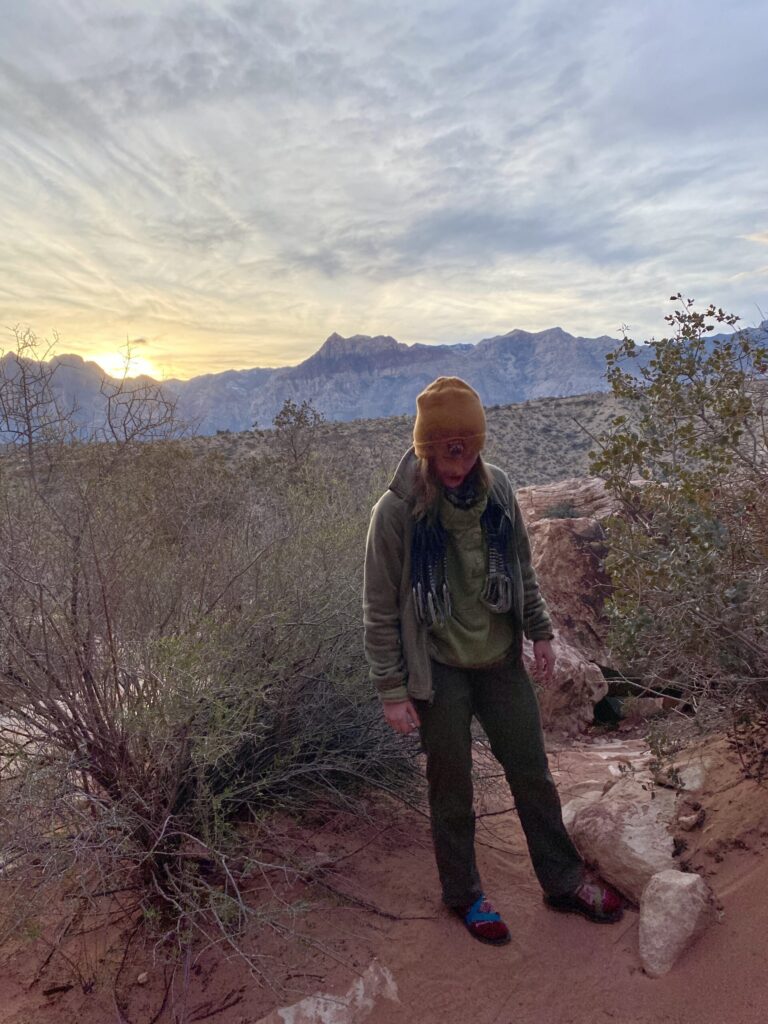
Enjoying a sunset in Red Rock Canyon, wearing my Chacos and some patterned socks
Versatile fashion for a capsule wardrobe
If taken with the right mindset, developing a capsule wardrobe can make your closet more environmentally sustainable. A good capsule wardrobe trades excess quantity for just a few items that are highly versatile and durable.
In my experience, having at least one great pair of hiking sandals in my wardrobe is instrumental to paring down the amount of shoes I need.
If you have sandals that you can pair with socks (e.g. no toe loop), then they’re suitable for most weather, except very cold and wet climates. If your sandals are neutral-colored, then you can wear them with almost any other colors. Even colorful sandals, if worn with neutral socks, can strike the eye as a neutral tone.
Most sandals can be dressed either up or down to match the occasion, too; they’re a true trail-to-town staple. Add an anklet or dress socks to sweeten the style, or thick hiking socks for a casual feel. One of my dear friends in university wore their trusty Tevas both to class and when crossing the rickety wire bridge at Birdsboro.
Great for most climates and terrain
If you’re comfortable with a bit of discomfort, sandals perform surprisingly well in most conditions–especially if you’re planning on being outside for many days in a row, as in a backpacking trip or an extended climbing trip. It’s true that fancy gore-tex boots will be more waterproof than sandals, but if water does manage to get into those boots, they will take much longer to dry. Sandals usually dry out in less than a day, and can even do so while still on your feet.
Sandals are also an excellent tool for rock scrambling and steep hiking. Even if the outsole of a hiking boot or trail running shoe is super grippy, I often find that my feet slide around inside the shoe. You can combat this issue by lacing your shoes extra-tight for rock scrambles, but tightly-laced shoes can quickly become uncomfy after the scrambling passes. It’s easy to tighten most sandals before a technical section of rock, and even easier to loosen them again afterwards.
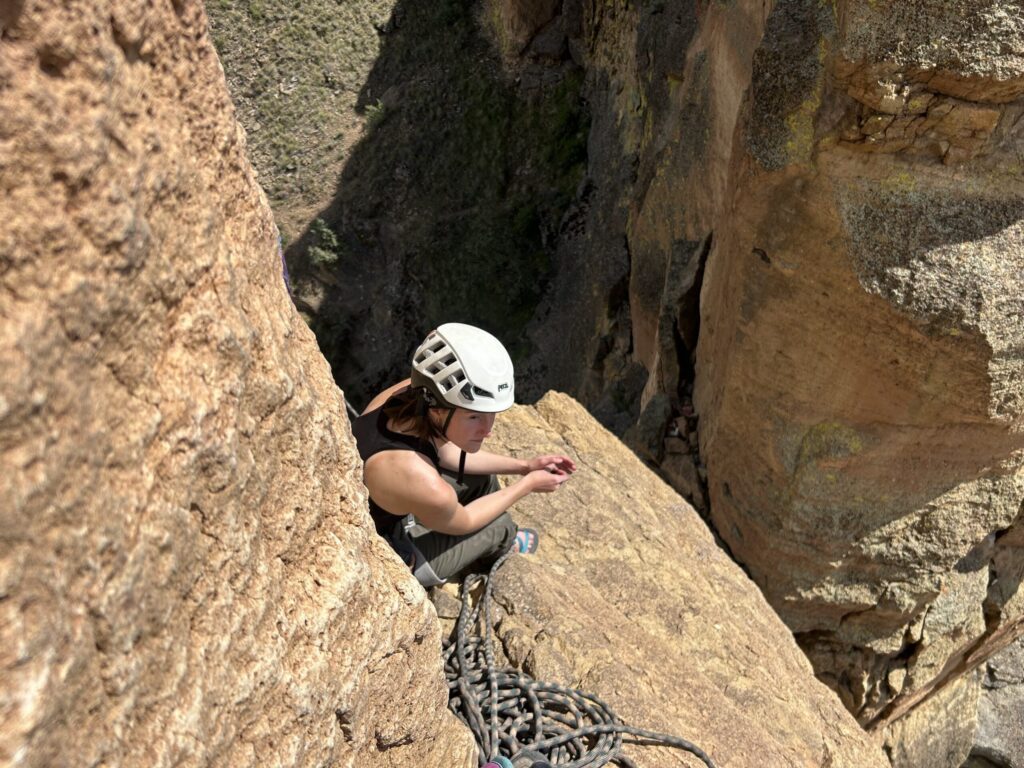
Me hanging out in sandals between pitches on Pioneer Route
Easy to put on and take off between climbs (or in any situation, really)
Laces are a hassle. At least, that’s what I (and my velcro climbing shoes) will tell you. Sandals are quick to put on once you’re done climbing, and their breathability makes them a much nicer receptacle for sweaty feet than boots or trail runners.
Conclusions
When you’re deciding what gear best suits your feet, it really all comes down to a collection of personal opinions. If the pros of wearing sandals feel more like cons to you, then there’s no need to take our advice. Plenty of feet and ankles out there thrive in supportive hiking boots or trail runners with a high stack and drop.
For other feet, though, sandals solve far more problems than they create.
If you decide that the benefits outweigh the potential drawbacks, then hiking in sandals could be your next adventure. Get out there and let us know how it goes!
Check out our other gear shop articles for more tips on how to equip yourself for the climbing world!
Leave a Reply