
There’s never been a more overwhelming time to get into trail running. Huge posters in outdoor stores that may previously have been occupied by dirty climbers, sweaty bikers, or hardcore hikers, now depict a new protagonist…high-tech, fully-kitted runners pounding downtrail. Trail running clubs are springing up everywhere, new gear is being developed and released at a breakneck pace, and EVERYONE is talking about it.
It’s an exciting era for the sport–according to the outdoor industry association (as of their 2026 running report), trail running is “one of the fastest-growing, most diverse segments in the outdoors,” with participation up a whopping 57% since 2019. That’s incredible.
Retailers, though, are snatching this information and running (haha) with it. REI’s divisional merchandise manager Emily Frugé confessed to Retail Brew this September that “In-store, we’re definitely being really, really strategic on how we’re outfitting the mannequins and really showing the full kit for the activity.” That’s an odd way to market a famously minimalist sport (and we’ll talk more about that later).
If the commercial sales push of trail running in REI is designed to show you a fully maxxed-out ultrarunning kit, how are you supposed to know, as a beginner, what gear you really need? How can you know what to expect your very first time out on the trail? How are you even supposed to know what trail running actually looks like?
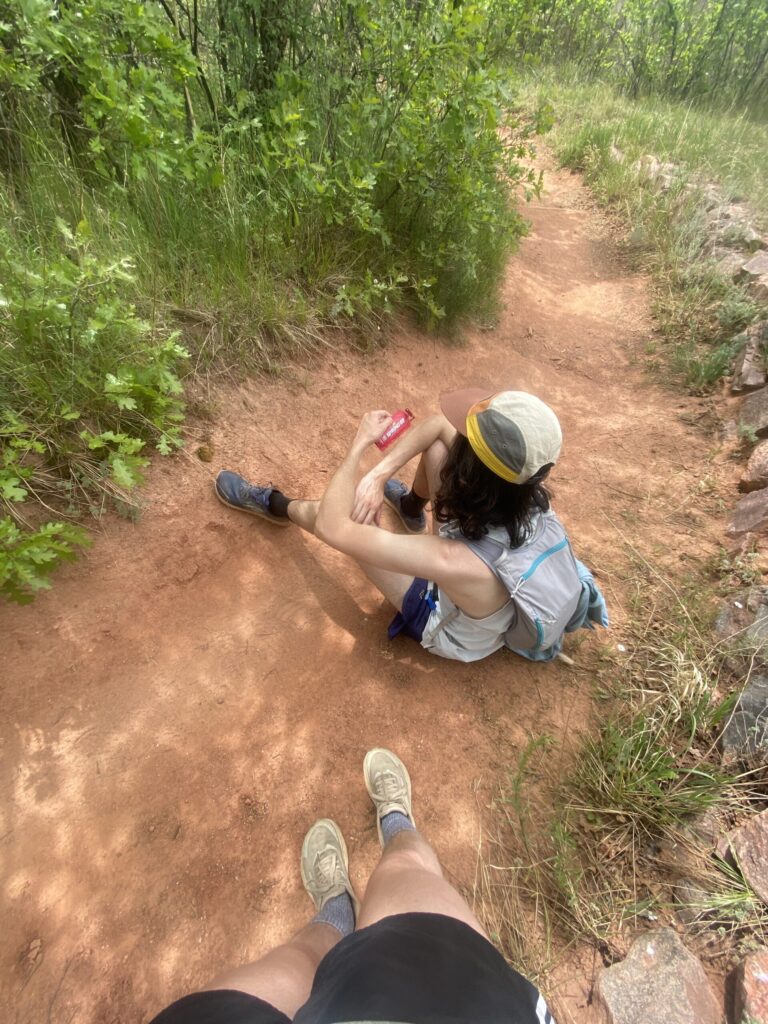
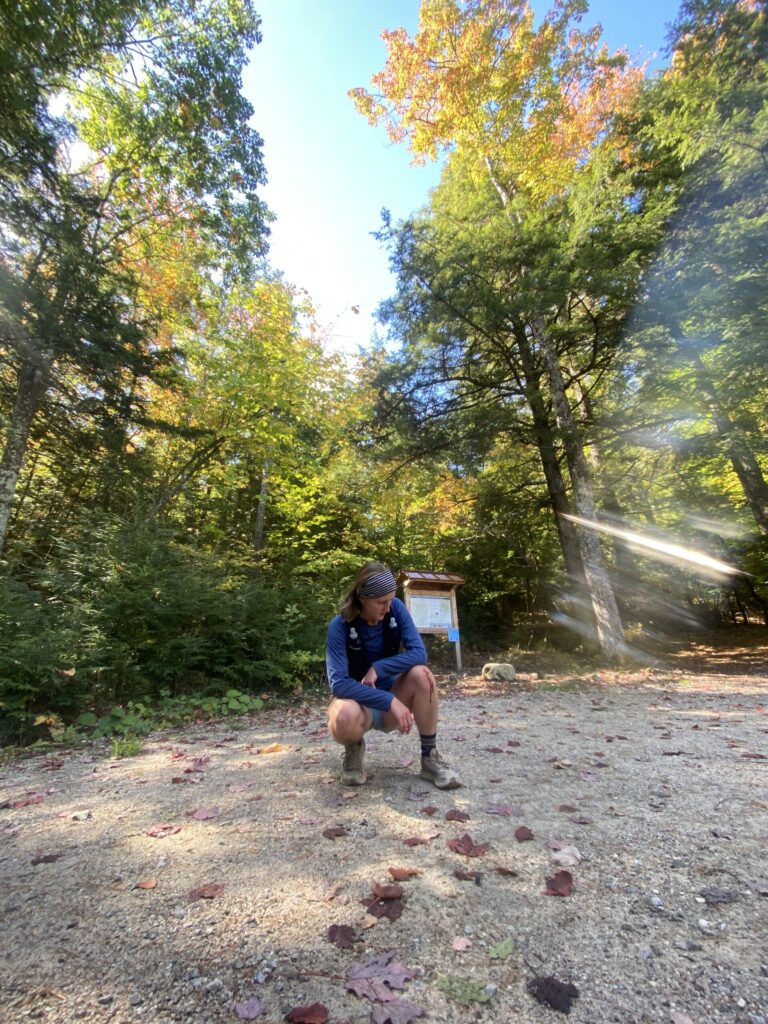
Taking a well-deserved break on a hot desert day
We’ll cover all that and more in this article. As a passionate beginner trail runner whose partner has been racing since middle school, an outdoor enthusiast, and a professional consumerism hater, here’s everything I think you should know about trail running before you leave your front door.
You don’t need a hydration vest
You walk into an REI in a small mountain town called Conway, New Hampshire in September of 2026. You’re greeted by larger-than-life trail running posters, fully outfitted running mannequins scattered as far as the eye can see, and cornucopia-like displays overflowing with state-of-the-art gear.
And what is almost every mannequin and model outfitted with? A hydration vest. The messaging is clear: everyone who calls themselves a trail runner should have one of these things.
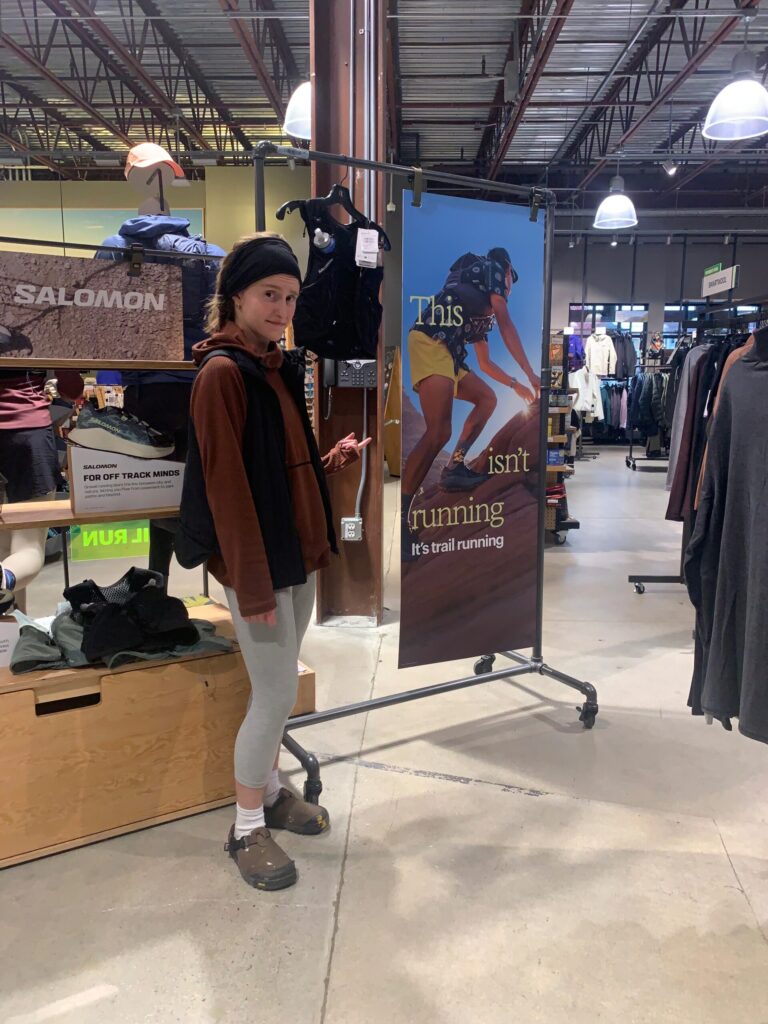
Finally clear-headed enough to judge the market manipulation that made ME buy a hydration vest in Colorado this summer, long before I was running far enough to actually need one
After having that overwhelming experience myself in REI last month, I turned to REI’s own “Expert Advice” blog to see what they really think about hydration vests.
Buried in the blog is an article titled “Trail Running for Beginners,” written by ultradistance runner Matt French. French describes that you actually don’t really need a hydration vest unless you’ll be out for a half or full-day adventure, and he lists tons of other water-carrying methods for shorter runs.
A hydration vest isn’t even the only option for longer runs; French also recommends hydration packs. I’ve noticed that hydration packs are generally a bit cheaper than vests, especially if they don’t have many bells and whistles. It’ll also be easier to find a pack secondhand, since they’ve been around for longer.
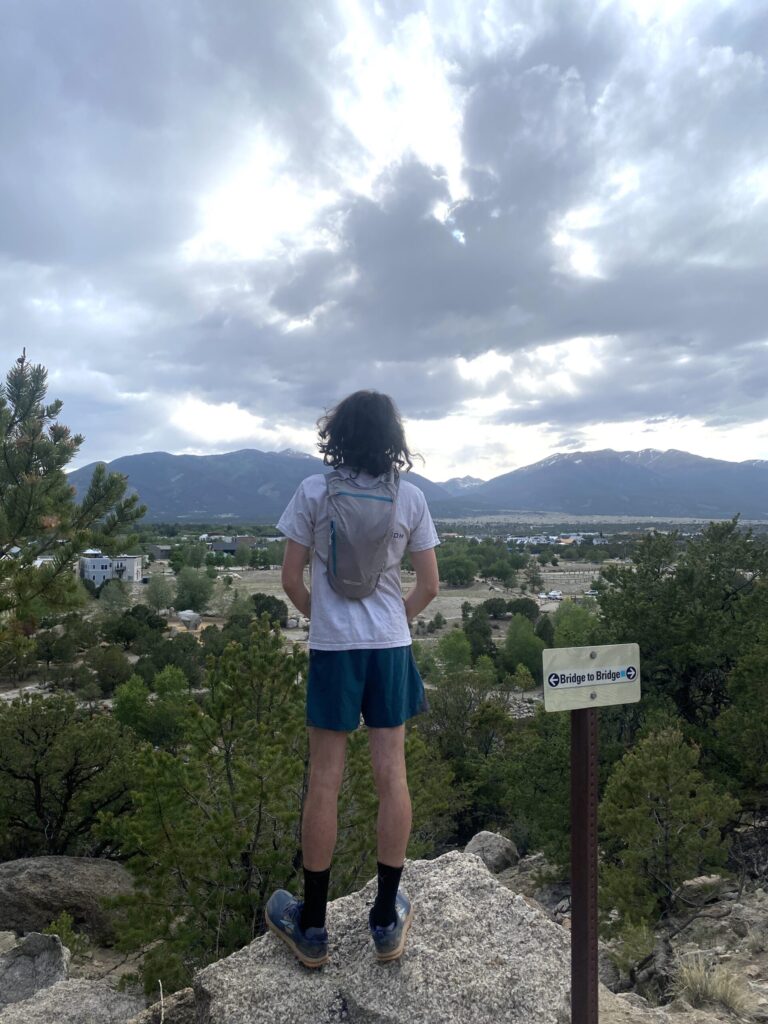
Tomo showing off a secondhand old-school running pack that fits a 2-liter reservoir and several layers
All that to say, hydration vests are super convenient, but not necessary for your safety (like I once thought). There are tons of cheaper ways to bring water with you.
If you’re going to make any steep trail running purchase to get yourself started, I would recommend a sturdy pair of high-grip shoes long before I would recommend a hydration vest.
You will fall over…a lot
Okay, I’ll be the first to admit that some of you might be more coordinated than me. But certainly not all of you! It’s important to emotionally and physically prepare for all the tumbles you might take while on trail, especially if you’ve only run or walked on paved surfaces before now. Staying on your feet while bombing a downhill is not as effortless as the pros make it look.
The solution? Increased focus and strong ankles and feet. No matter how pretty the view is, it’s always important to keep an eye on the ground, especially if you’re going downhill. You can strengthen your knees and ankles with balance exercises and yoga. With practice, you’ll also become more nimble in general, allowing you to take those rocky slopes at faster and faster paces.
Solutions aside, I’m here to remind you that it is totally okay to fall. It’s part of the sport.
TW: dried blood
Posing with a busted-up knee after a run that was supposed to be chill
Prep your runs like you’re going hiking
I mean this in two main aspects: navigation and packing.
Reading neighborhood street signs is not the same beast as managing navigation in the woods, desert, or mountains. Trails may be sparsely marked, especially in smaller state or county parks, and you might have to take several turns with no distinct landmarks.
I always have backup navigation ready to go unless I know a trail quite well–just like I would on a hike. I’ll usually run AllTrails in addition to Strava, or study a physical map before I set out. I’d recommend downloading a map if you can, just in case your cell service is subpar in the woods. Of course, always also pay attention to trail signage.
Depending on how far you’re going, you also might need to pack your bag just like how you would for a hike. That could mean layers appropriate for changing weather, sufficient food and water, or even a first-aid kit. I usually don’t bring much if I’m going to be out for less than an hour. Any longer than that–or if I plan to pop above the treeline–, I start adding some serious stuff to my pack.
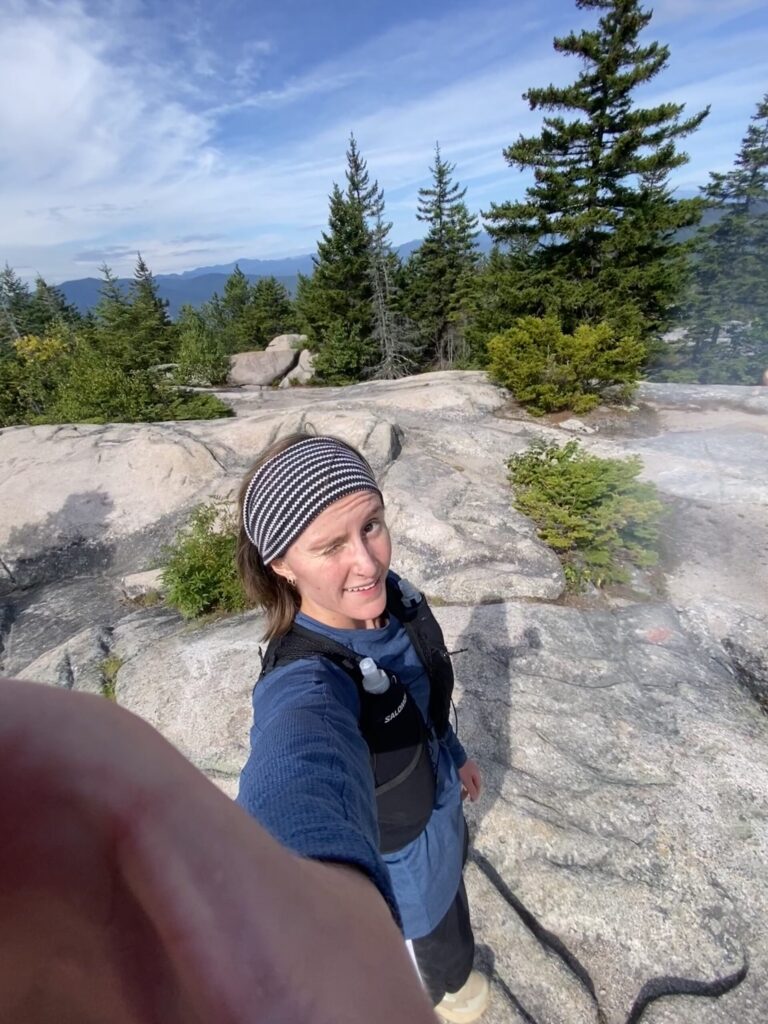
I judge my layer-packing by elevation and terrain (will I be exposed to wind and/or sun at the summit? will the temperature significantly drop as I gain elevation?). I’ll factor in distance as well when deciding how much food or water to pack. If I’m running more than 10k or tackling a summit, I’ll be sure to pack at least one energy bar and a liter of water. Just like hiking, it’s important to consider what layers you might want if you become injured or stuck. Running over a summit in one layer is fine and dandy, but spending several hours exposed to wind and weather up there is a different story.
If you’re coming from the road or indoor running world and aren’t so familiar with packing for the woods or mountains, check out our article on layering and our packing list for bigger hikes.
Your trail times will be slower than your road or treadmill times
There are all sorts of factors that contribute to this phenomenon, and none of them are to be underestimated–not even a few roots and rocks. If you’re worried that putting down a slower pace might dishearten or discourage you, set goals for yourself that are totally unrelated to pace. This is especially important when you’re just starting out.
How much elevation can you tackle? Which hills or mountains can you summit? How many times can you get out in a week? How much of your local park can you explore? How much fun can you have? These questions are all much more relevant to the trails than how fast you can run.
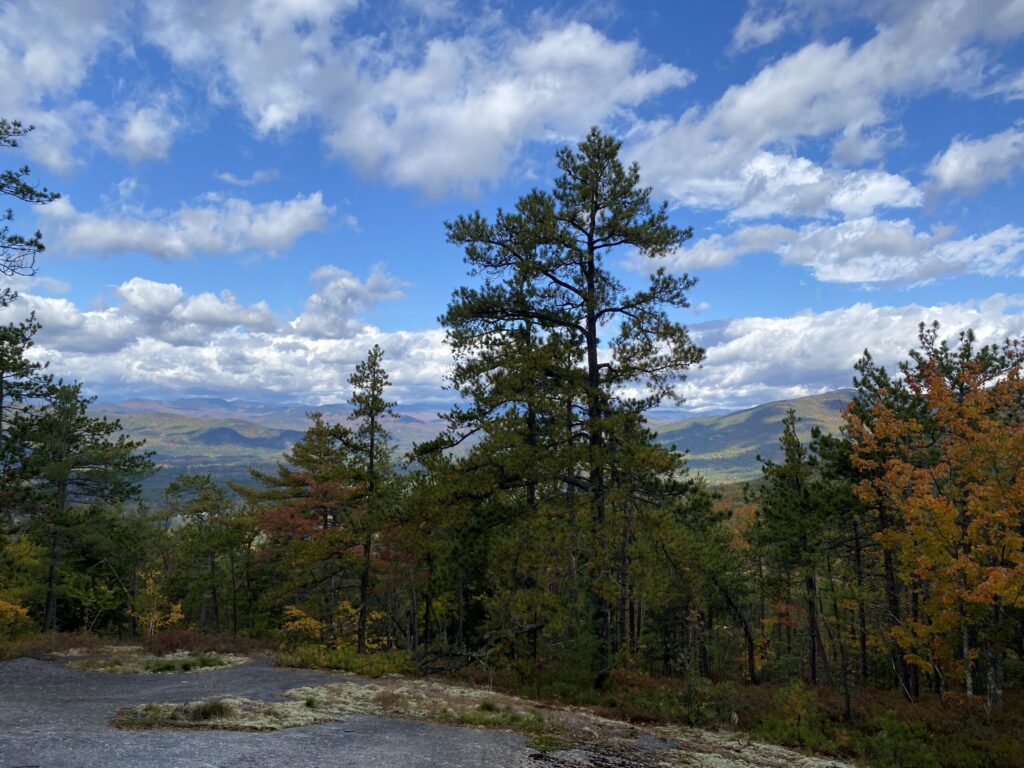
Here’s another challenge: how profoundly can you enjoy a beautiful view?
The advertisements only show you a snapshot
Yes, even when the model is an actual trail runner, and yes, even when they’re actually out on a run during their photoshoot. The photo you see on a retail poster is the very best of dozens of frames–not to mention that the athletes in these photos are often professionally trained to look good while doing their sport.
What you don’t see is all of the photos that were just a hair more awkward, all of the moments that were deemed not even worth a photo, and all of the runs where a photographer didn’t tag along at all.
Even this photo, in which I’m obviously dead tired, captures one of the more flattering moments on this exhausting run. No single photo tells the whole story!
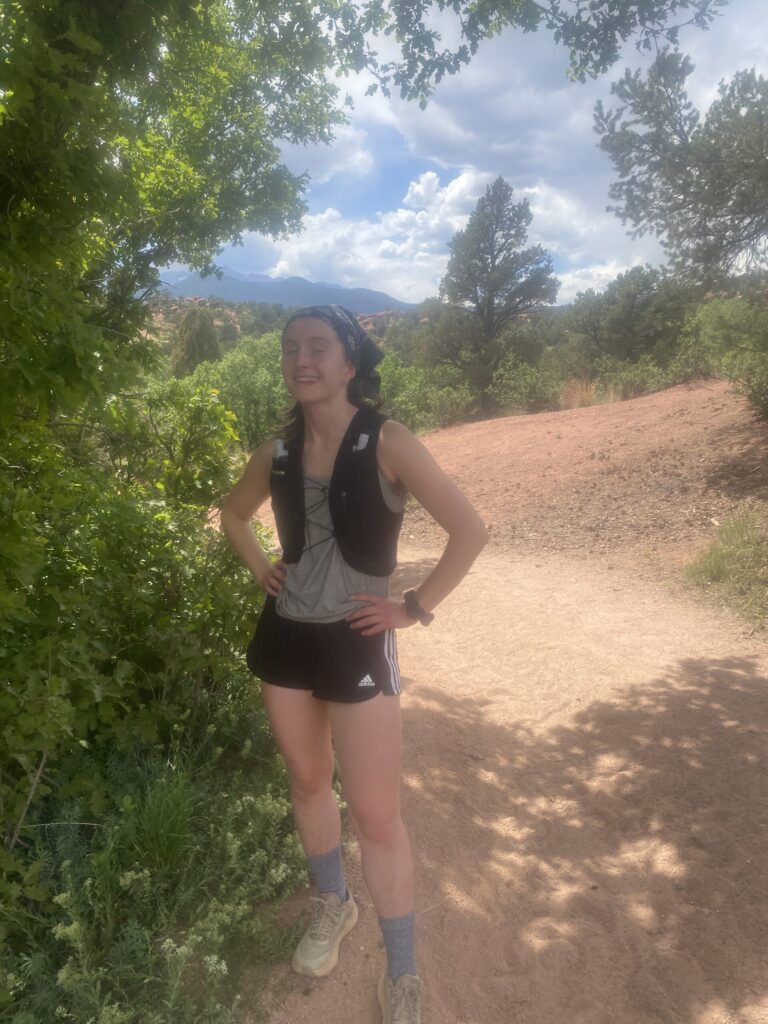
It’s okay to struggle, to take breaks, and to not be wearing a perfectly matching set of activewear. It’s okay to be covered in mud, sweat, and bruises. Everyone who loves to run will see you for what you are: a fellow athlete.
Your stuff is not what makes you look cool
People who sell stuff have bottomless motivation to insist that you need their stuff if you want to look cool. Unfortunately for them, that’s just not true, especially in the outdoor sport world. You make the outfit cool when you put it on and take it on an adventure.
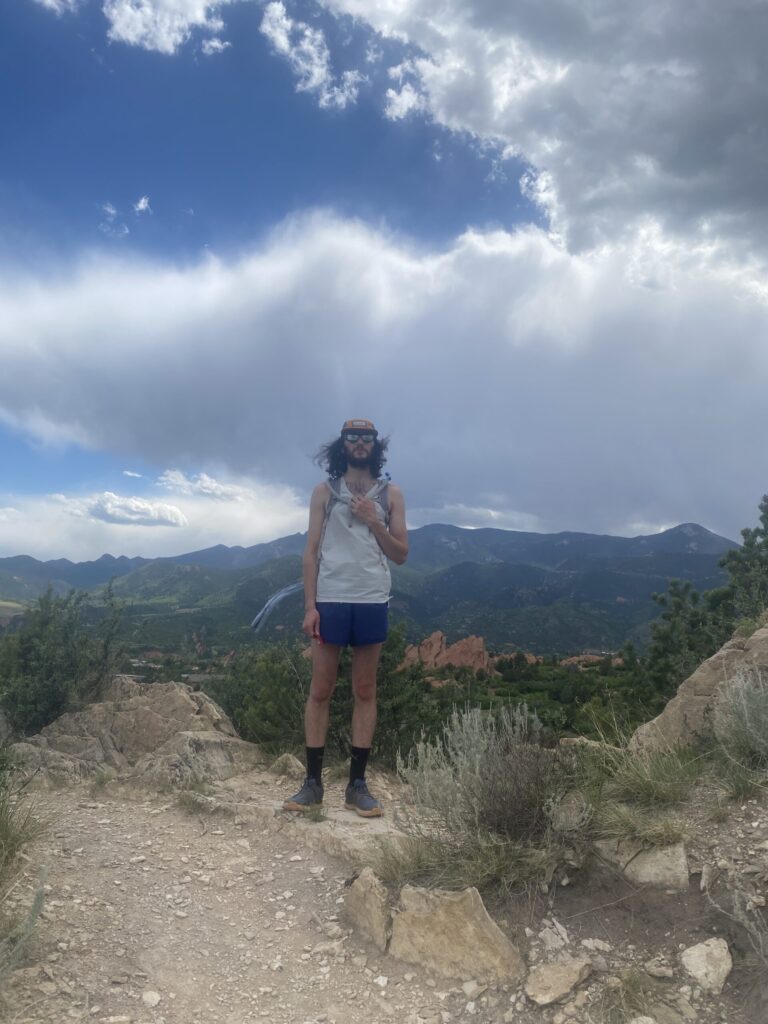
The only brand new thing in Tomo’s kit here is his shirt
You don’t need to buy something to look super sick. You don’t need the newest styles, the trendiest shoes, or the most in-season colors.
Style the clothes that you already have. Thrift. Do something fun with your hair. Go to a beautiful place. If you care about photos, practice poses instead of making purchases. When you’re out on an epic trail run, trust me: you’re already cool.
Aura never goes out of style.
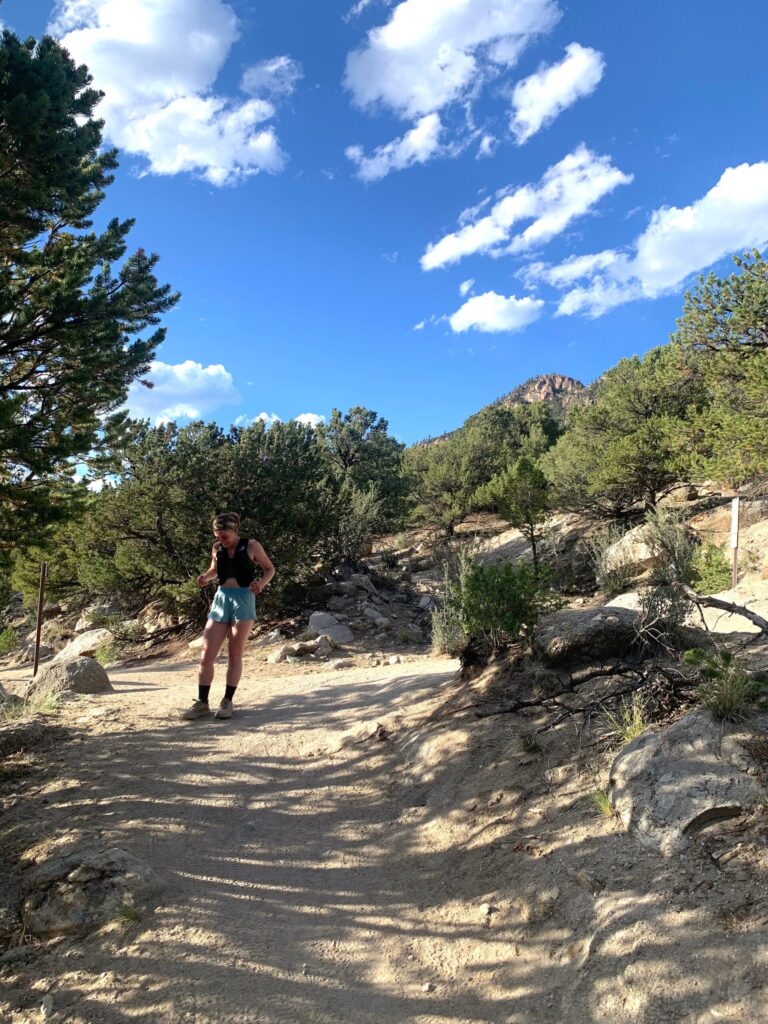
A decade-old pair of shorts, a sports bra that’s almost that old, Tomo’s headband, and half-off shoes
An important footnote to this section is that there isn’t a whole lot of required safety gear for running. It’s different from sports like downhill snow or rock climbing, where certain pieces of equipment can make or break a serious accident.
Much of the most innovative running gear is designed for comfort, style, or convenience. All you really need to get started is a t-shirt, shorts, socks, a pair of trusty shoes, and a water bottle. You probably have most of those things already!
Running isn’t the only thing runners do while training
Most of the trail running pictures you’ll see in stores or on social media capture the visually glamorous aspects of the sport. You’ll see folks actually running (and with fabulous form), stunning backdrops, and expensive shoes kicking up dirt. As with any sport, though, there are so many other facets to the process that you rarely see. These small moments might not be featured on billboards, but they’ll become treasured parts of your routine.
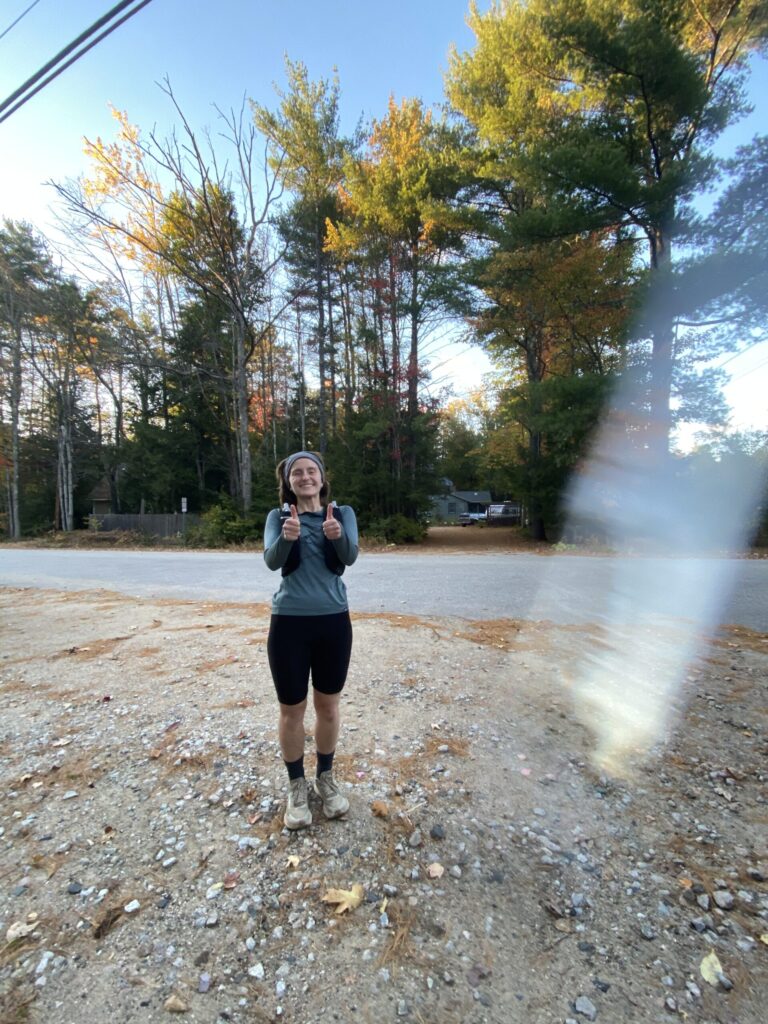
All smiles and warming up for my first 10k
- Warming up. This is absolutely crucial to having a successful and injury-free run. Most people will do dynamic stretches for a warmup, like leg swings, “opening the gate,” lunges, and more.
- Stretching and cooling down. Also crucial to running injury-free. This is the time for static stretches.
- Cross-training and building strength. It’s just plain helpful to be physically strong when you’re running trails. It keeps your joints safe, makes your uphills easier, and stabilizes your body on rough terrain.
- Literally just hanging out. Stopping for iced coffee, enjoying a nice view and eating an energy bar, hanging around after races, and strengthening community through run clubs are all huge parts of running culture. These aspects are also great motivators, especially in the beginning or on hard days.
- Eating food–lots of it. Mostly just for the love of the game, of course, but also to fuel future miles or recharge after a big day out.
- Choosing or designing routes… Half of the fun of trail running is planning out your route. Scrolling through AllTrails, scouring elevation maps, and memorizing trail junction turns all deeply characterize the sport.
- …but often choosing the same route over and over again. Yeah. We all have our favorite local loop. Show me a retail poster with a county park on it!!
We LOVE MAPS!!!!!
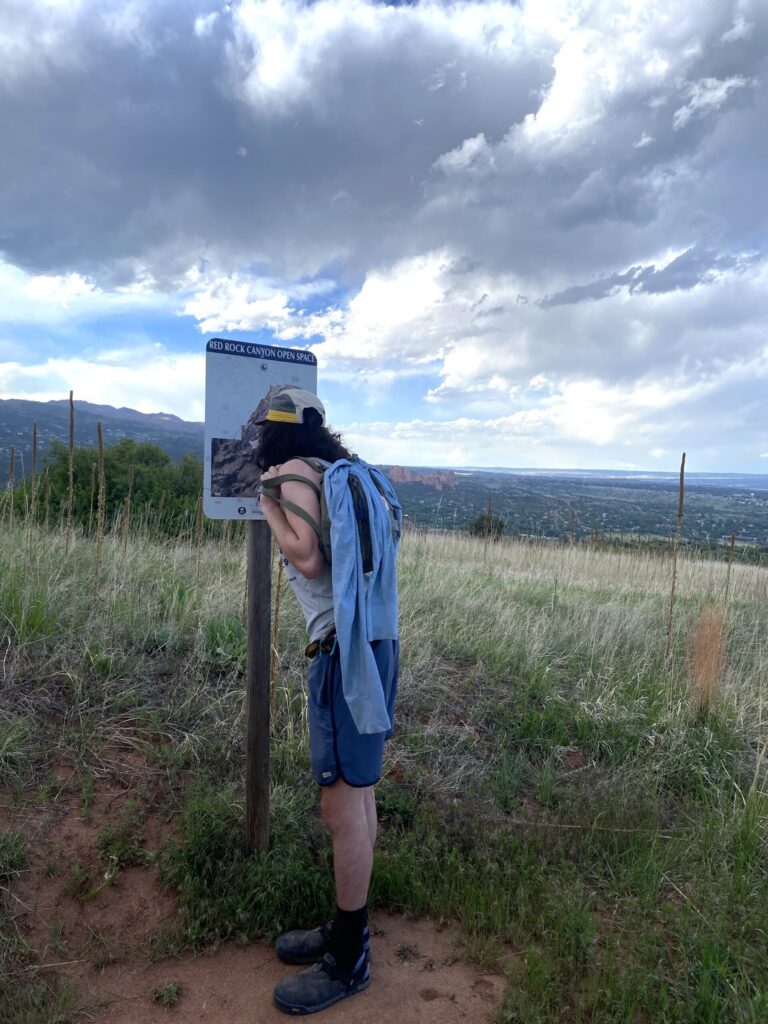
Going uphill is really hard, and going downhill is even harder
If you live in a hilly area, you’ll realize quickly that trails can be graded much steeper than roads. That can make trail running ascents particularly difficult, for obvious reasons. It is completely okay to hike a LOT when you’re ascending a mountain, only running when you feel able. Even quite serious trail runners do this all the time. I’m not kidding.
Given this, it’s easy to imagine that the ascent is the most difficult part of a trail run. Descending, though, is its own ordeal.
Running downhill is far more technical, far more dangerous, and far more mentally demanding than most ascents. Be prepared to not make much time back on descents, especially if you’re a new or generally cautious runner. I recommend being confident in your footwork on rough terrain before you really let it rip.
As your confidence and skill develops, bombing downhills will undoubtedly become a thrilling and beloved part of your trail running experience. Just give it time.
You are a runner!
Toxic, competitive circles will do everything they can to dictate your status as an athlete. Brands with gear to sell will make you feel like you’re on the outside until you buy their stuff. Rough trails and hard days will ignite this same harmful rhetoric in your own mind. I urge you to resist.
If you run, you are a runner. Simple as that.


Leave a Reply