
Travel is always expensive, especially if you’re going a long way.
What if I told you, though, that you can make it from the Mountain West to the East Coast while pretty much only spending money on gas? What if you don’t even have to sacrifice that much to do so?
We’re going to tell you how to find totally free and safe places to stay the night, what food to pack so you don’t have to purchase any on the road, and even where we found a $2 shower with zero wait time. Here are the best recommendations we have for you after driving from western Wyoming to New Hampshire in four and a half days.
Finding free camping
Everyone wants discuss this question, but why are we writing about it? There are plenty of existing articles out there about free camping. Isn’t the conversation over?
Well…not really.
Regulations are changing rapidly, especially since a 2024 Supreme Court decision that allows cities to ban sleeping in vehicles. We were forced to pass up tons of locations that offered free parking until as recently as 2024, and then permanently closed their lots to overlanders.
Free camping is a changing game. If you live on the road, I encourage you to keep both yourself and your community updated by reading current resources and sharing them with others. This amazing and super recent article by Kristin Hanes is one of the best explanations I’ve found so far of what’s going on with vehicle sleeping bans.
Here’s what we have to say in light of the recent crackdowns.
Avoid trying your luck on street parking
Parking on backroads, in city parking spots, or in neighborhoods has long been a reliable overlander hack. Now, though, many cities have strict rules prohibiting overnight parking–and not all of them have clear signage declaring it. While there still are some safe spots out there, we avoided public street parking anyway just to save us the headache. We were still able to easily find a free spot every night!
If you’re still interested in parking on the street, be sure to read up on local legislation so you can avoid that midnight knock and any accompanying fines.
Walmart and Cracker Barrel are still your best buds…but do your research
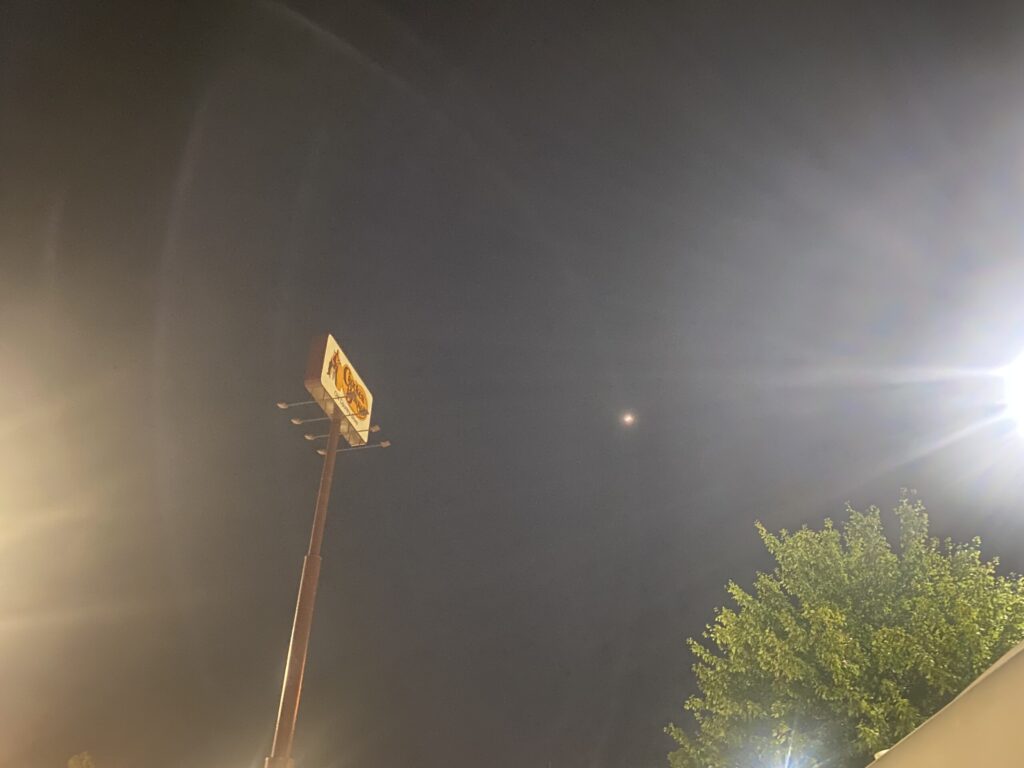
A truly stunning conjunction in the Midwest night sky between the partially eclipsed moon and a grotesquely tall Cracker Barrel sign
We stayed at either a Walmart or a Cracker Barrel for three out of our four nights on the road. They’re certainly not the most scenic locations, but in many cases, they’re still a free and safe place to stay.
I found over the course of our journey that Cracker Barrel is much more reliable. Every single location we called was more than happy to let us crash.
The rules are a little less consistent at Walmart. We were able to camp at one in Laramie, but after that, we had little luck finding Walmarts that allowed overnight parking on our particular route. That includes Walmarts that used to host travelers, but have since changed their rules. Always be sure to call ahead, just in case local regulations have recently changed.
Although Walmart is less consistent than Cracker Barrel in terms of overnight parking regulations, the Walmart we did stay at had a quieter, flatter, darker, and larger lot than any of the Cacker Barrels. Many of the Cracker Barrel lots we camped in were either bright, sloped, or a bit loud. We didn’t mind at all, but if any of those factors bother you, definitely take them into consideration.
Even big chains like these can be hard to come by in less populated states. Make sure you plan your route ahead of time so you don’t accidentally pass both of the two only Cracker Barrels in Nebraska. Take a look at this handy map to see how many there are in the states you’ll be passing through.
RV apps and websites
There are tons of forums out there that host discussions about free camping across the U.S., and they are invaluable resources. The important thing about forums is that they’re dynamic; current reviews from real folks are crucial in the light of recent overnight parking bans.
Many of these sites have reviews for various Cracker Barrel and Walmart lots, of course, but they also highlight visitor centers, rest stops, BLM land campgrounds, and other more unique hangs. “RV Parky” is how my partner and I discovered our favorite free camping lot ever.
Freecampsites.net is straightforward and easy to use. iOverlander is also an excellent resource for free camping, and it includes spots to fill up on water, dump waste, and more. Always cross-reference with multiple sites when you can, especially if the reviews on a particular spot aren’t all too recent. Of course, I’d always also recommend giving each place a ring before you arrive to ensure they don’t have new parking bans.
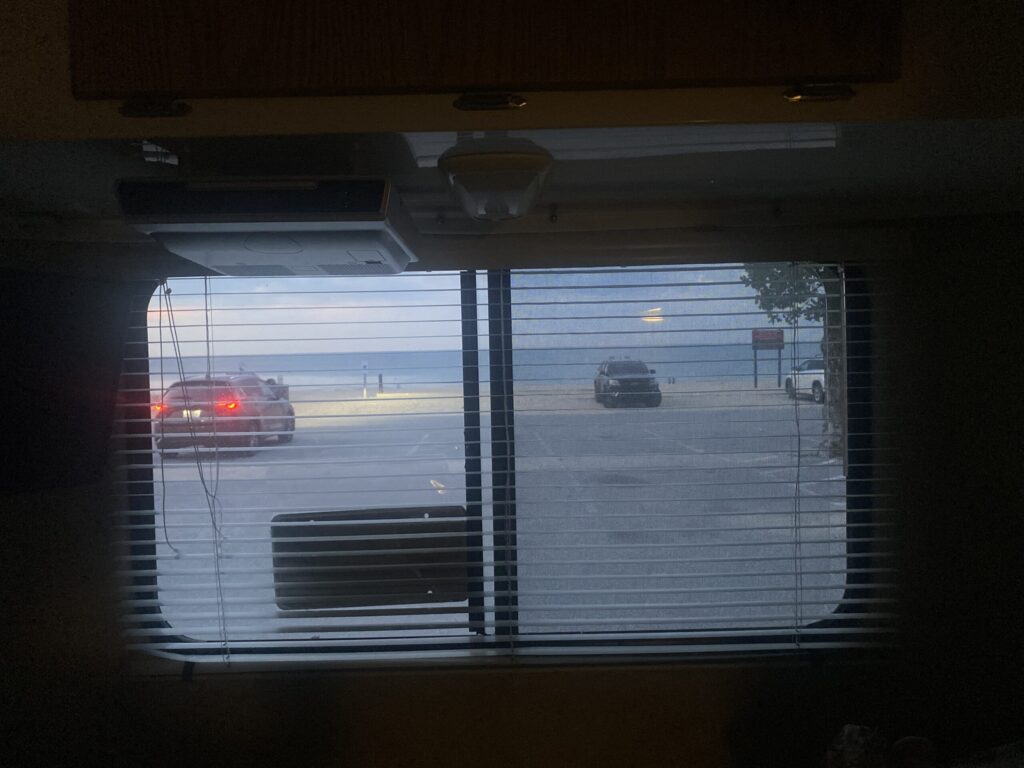
The view from a spot we found on RV Parky
Packing cheap food for affordable overlanding
The goal of our food-packing strategy was to avoid going out to eat, plan meals that are quick and easy, and purchase generally cheap groceries to balance out how expensive our gas was. Here’s how we ended up doing that.
Easy meals
We always pack for a cross-country drive like we’re prepping for a backpacking trip. That means lots of dehydrated and canned stuff, preferably avoiding food that creates too many dirty dishes, and planning out balanced meals that are easy to make. I find that very last one really important in avoiding the temptation to go out to eat.
The easiest meal we made was a beefed-up ramen; in addition to the seasoning packets, we also stirred in a bunch of our dehydrated veggies and proteins. This meal takes less than ten minutes to chef up, and it’s surprisingly balanced for how quickly it comes together. Perhaps most importantly, doing the dishes after this meal couldn’t be more mellow. Every ingredient cooks up in the same pot!
Cheap groceries
As always, focusing on ingredients over prepared food can save you a lot of money. Adding some prepared foods to your list makes cooking easier, but your grocery run will quickly get expensive if that’s the only thing you buy. Try to include at least one or two ingredient meals in your plans.
We loaded up on TVP, mushrooms, polenta, and veggies at a backpacking food resupply–all dried. We also carefully selected a few prepared treats: canned soup, canned vegan refried beans (makes a great dip for car snacking), and the aforementioned vegan ramen.
Car snacks!!
This one, tragically, is easier to forget than you might think. If you live in a trailer rather than a van, like I do, all of your food is virtually inaccessible while on the go unless you consciously decide to bring it into the car. That’s why we’re always sure to pack nuts and dried fruit to make trail mix, some fresh fruit, chips, pretzels, and anything else that’s easy to munch while driving. Pro tip: we usually just leave snacks like these in a reusable grocery bag in the backseat. They NEVER enter our trailer, lest they be forgotten there.
Staying well-fed during the long hours between lunch and dinner meant we never once had to pull over and buy an emergency sandwich.
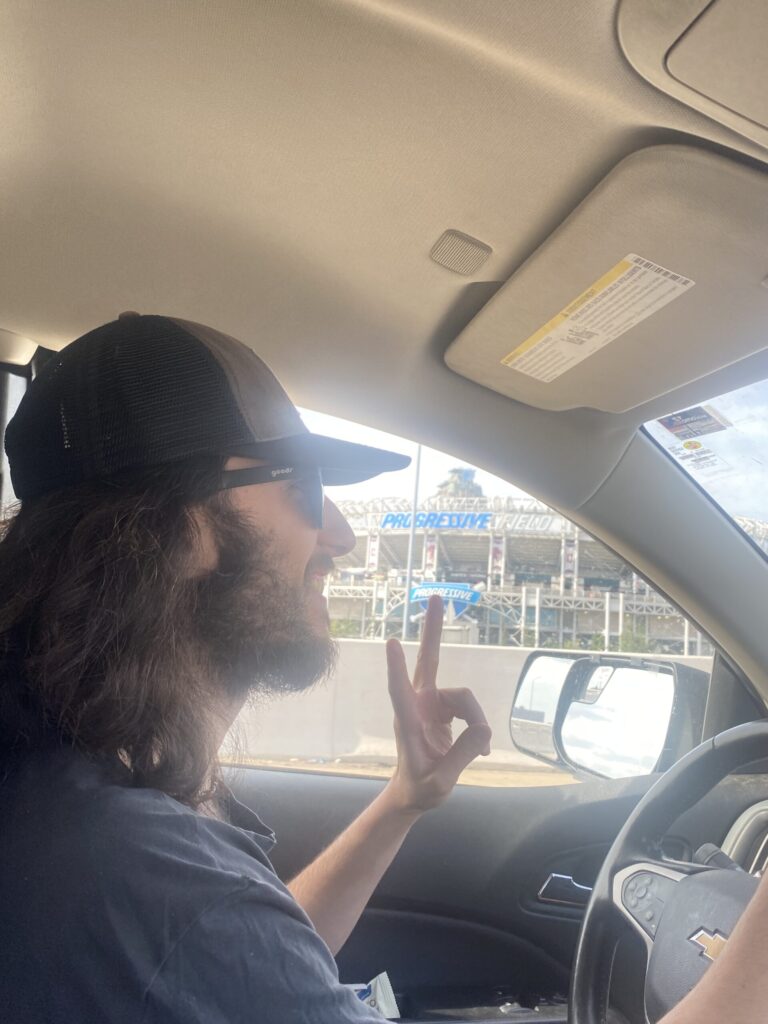
Smiling, not just because we were passing Progressive Field, but because we ALWAYS remembered our road trip snacks
Bonus: a low-down on our surprise favorite spot
If you’re traveling through the northern Midwest, like we were, then I have an absolute must-stay free spot to share with you: the visitor center at Indiana Dunes National Park. The back lot has a really smart layout, furnishing it with plenty of big-rig parking while still being a fairly small lot. You’ll almost definitely find a spot, but you’ll also never be too far from rustling grasses, chirping cicadas, and tall trees. There’s also a designated “pet area” that’s perfect for a morning or evening stroll with your four-legged best friend. If you park by the pet area, you’re almost guaranteed to meet some lovely critters.
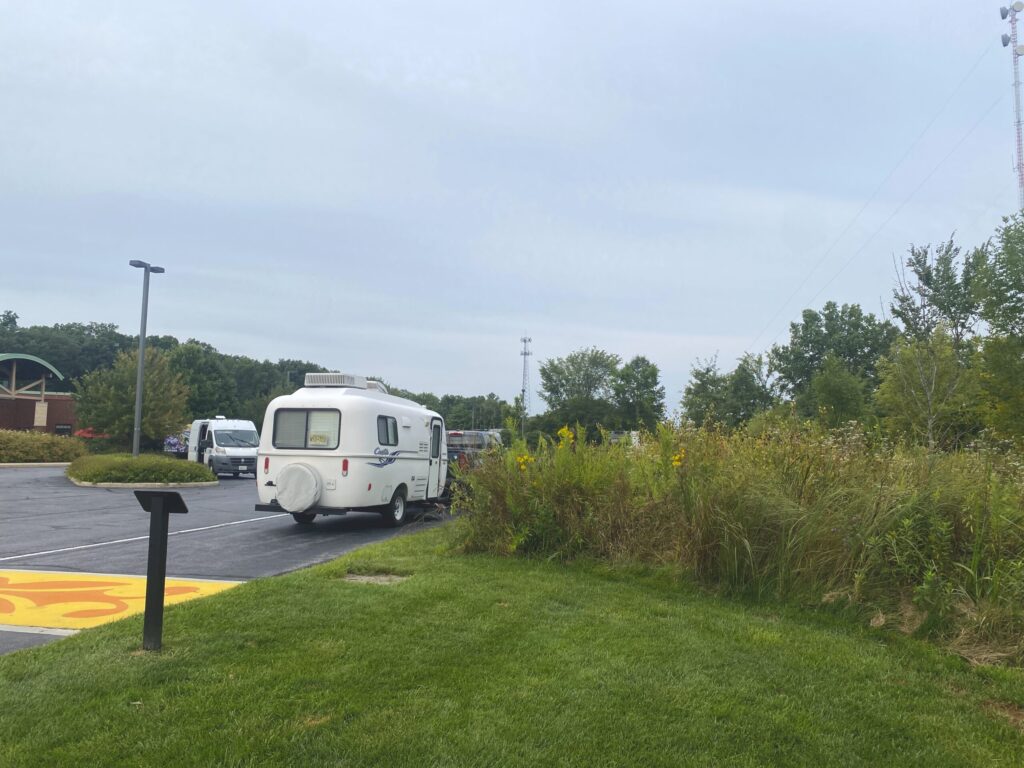
I highly recommend checking out the visitor center when it opens in the morning, too. They’ll have you covered on the essentials, like clean bathrooms and a water bottle filler. If you have time to explore further, visit the gift shop. It has its own tiny cafe with delicious espresso beverages, and all of the rangers are friendly and knowledgeable. We came away with several maps, multiple birding pamphlets, and the cutest little cortado I’ve ever seen.
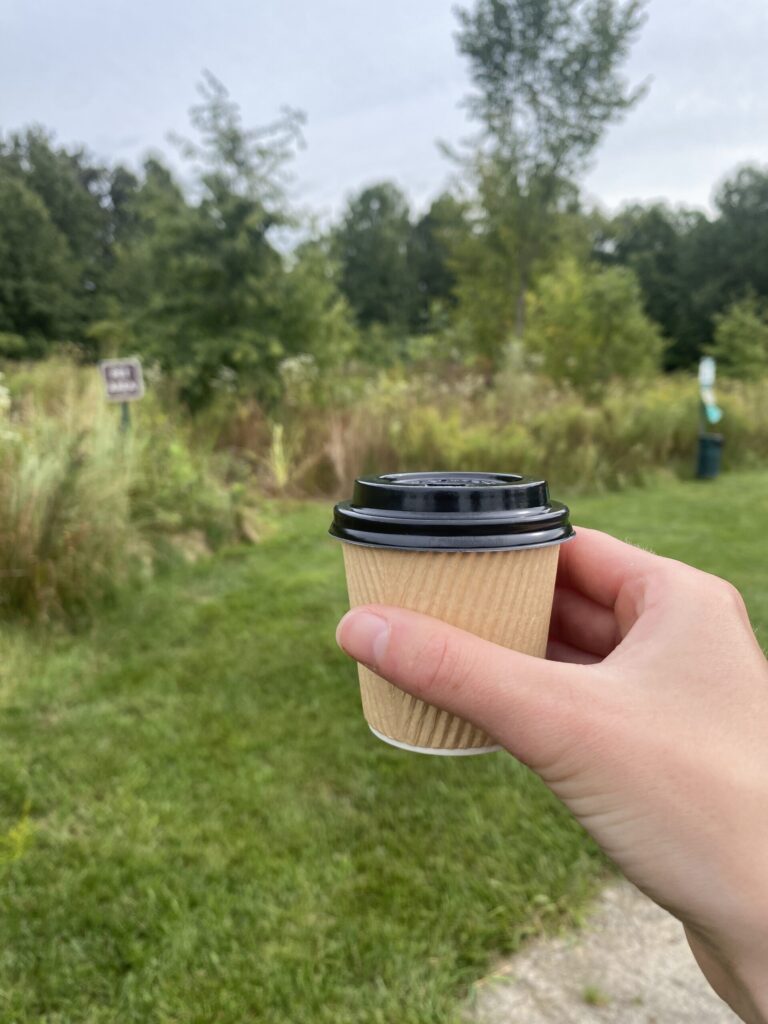
It’s true! And the barista was so nice to me
The best news yet: there are TWO ways to get a cheap shower in the Indiana Dunes area (three if you count the Planet Fitness in Michigan City). If you have an America the Beautiful pass and can enter Indiana Dunes National Park for free, there’s no additional cost to use the bathhouse at West Beach. If you don’t have this pass, the cheapest way to rinse off is to bike or walk into the state park (also called Indiana Dunes) for $2. You’ll find outdoor beach showers right by the restrooms!
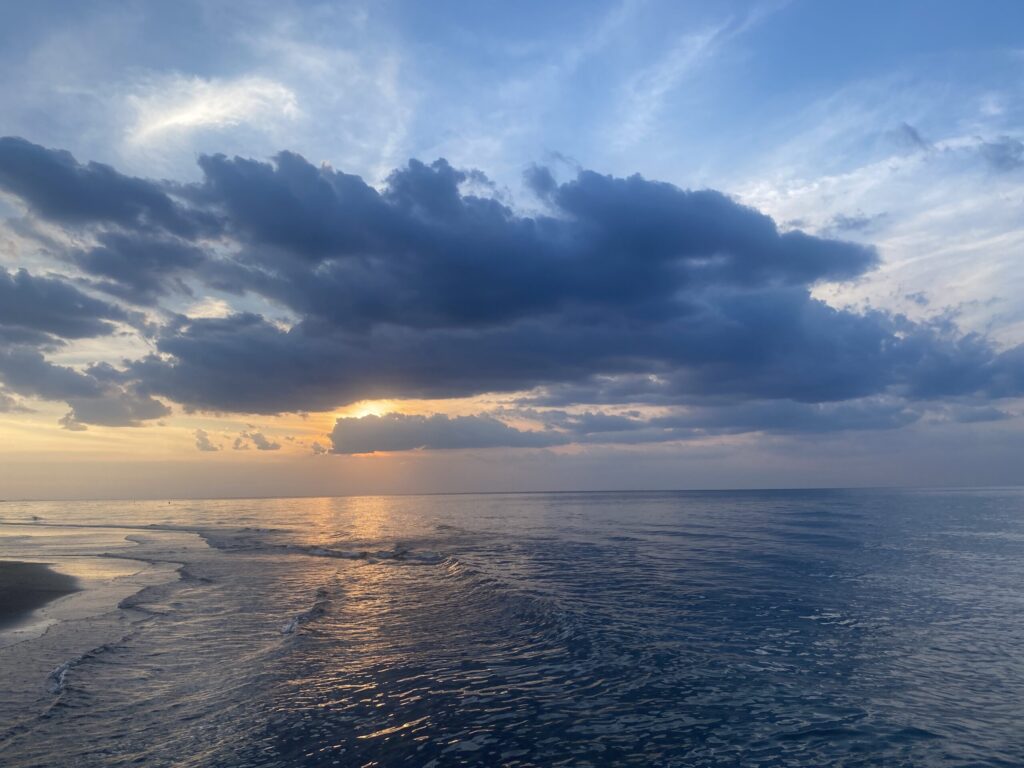
It costs $20 to take your whole rig to the beach in the state park, but if you’re willing to pay up (it goes to a good cause!), the lots are perfect for cooking dinner with a view of the sandy lakeshore. That’s what we did, and it was totally worth it.
Conclusions
The world is changing quickly, and it’s unfortunately becoming more difficult to be a nomad. Age-old traveler havens are closing their proverbial doors all over, and you might not even know it until you wake up one morning with a ticket on your rig.
All we can do as a community is be there for each other, keep our own doors open, and share any information we come across. If you’re a nomad, or even just a habitual road tripper, fill the comments with all the great spots that have made you feel safe and welcome recently!


Leave a Reply