We get it better than anyone. It’s winter, but you still want to get out there–gape at mountains, frolic in the fields, scale cliffsides, and go on birding walks. It can be difficult, though, to do the things you love when the elements are against you. I’m here to tell you how to totally turn your winter around with one simple trick (and make your fall and spring nicer, too): learning how to layer properly. Read on for some basic layering tips that will keep you toasty all year long.
Why do we layer in the first place?
In truly effective layering, each article of clothing has its own function. It’s rare to find one jacket that has every quality you need, and more often than not, those all-inclusive pieces will be poorly equipped to handle how variable nature is.
Packing in layers allows you to be genuinely prepared without being overprepared. When the sun is at its highest, you can stuff your warmest layers into your backpack and forget about them for a while. When the wind picks up or the clouds scud in, though, you can reach into your pack and re-equip items.
This is especially helpful for sports like climbing that vary frequently from sitting around and getting cold to engaging in high-output activity.
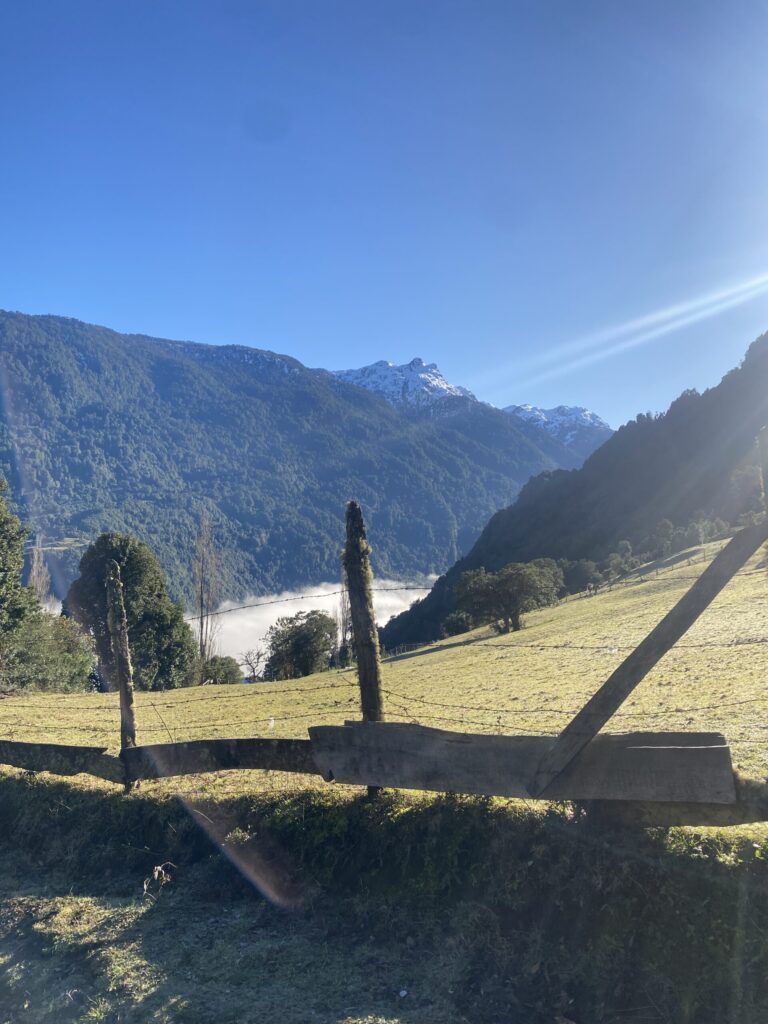
Early morning sunlight striking heavy valley fog in el sur de Chile
The essential layers
(and how to wear them)
There’s a generally-accepted order of layers that is thought to keep you the most comfortable on chilly days. I confirmed my existing knowledge of layering strategy with outdoor retailers and experts, like REI, Backcountry, and Patagonia to make sure I’m bringing you only the best info. Here’s what I know.
Base layer(s)
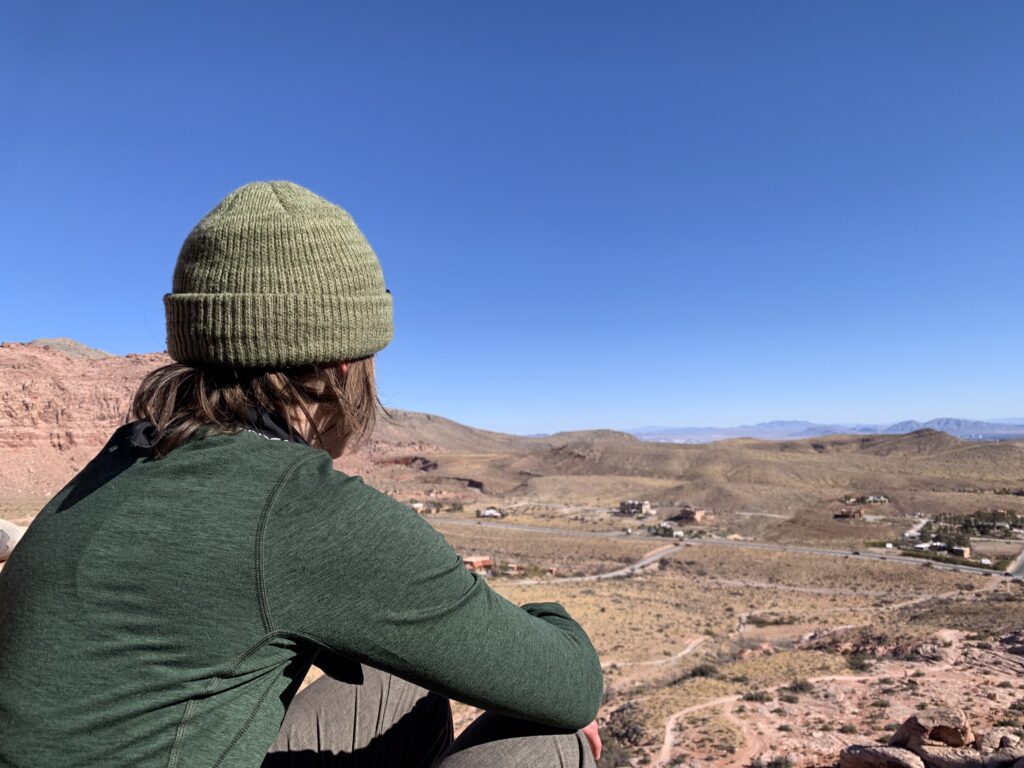
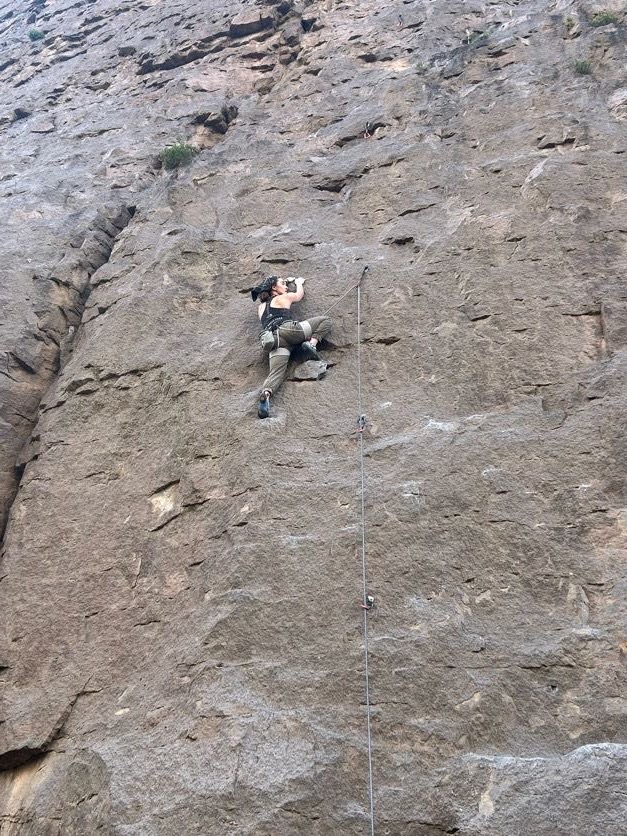
This is the layer (or layers) that sits closest to your skin and wicks away any moisture that builds up when you sweat. In chilly weather, a tightly-fitted long-sleeve base layer is a must for most people. If you’re anything like me, though, there’s nothing more annoying than really tight sleeves and itchy stitching near your armpits. If your shoulders and lats just cannot be contained, you can always pair a mildly-fitted longsleeve with a tight tank underneath. I find that the tight tank keeps my core warm while leaving my arms and back more free to move, and a slightly-looser longsleeve still holds in heat well.
Me in my favorite recycled-material base layer with one of my signature fitted tanks underneath
This tank from The North Face is the one I was wearing under my base layer in the above photo
It’s especially important to avoid materials that absorb and hold onto moisture when selecting your base layer, even if they might seem comfy and breathable at a glance (like cotton or bamboo). Synthetic materials like polyester are always a safe pick for this reason. If you’re worried about the sustainability of synthetics, look for clothes that are bluesign certified or made from recycled materials. You can read more about this in my article on sustainable consumption for outdoorspeople.
If you’re really anti-synthetics, then lyocell–a fabric made from wood pulp, usually eucalyptus–is also a good bet. Lyocell products are generally more rare and expensive than your average cotton shirt, but if you can afford them or are lucky enough to find them secondhand, then go for it. Lyocell is breatheable, moisture-wicking, and much better for the environment than many other textiles. Vegans beware, though–make sure you’re checking the tag to see if the lyocell is blended with any other materials. It’s sometimes used in concert with merino wool, which is not always cruelty-free.
Mid-layer(s)
The mid-layer has one main purpose: insulation. This is where you’ll find peak fluffiness and coziness in most hiking and climbing kits. A quarter-zip fleece paired with a puffy jacket is my personal favorite mid-layer combo for cold days at the crag. For trail running or other sweatier activities, you could also consider a lighter fleece and a vest for better mobility and breathability.
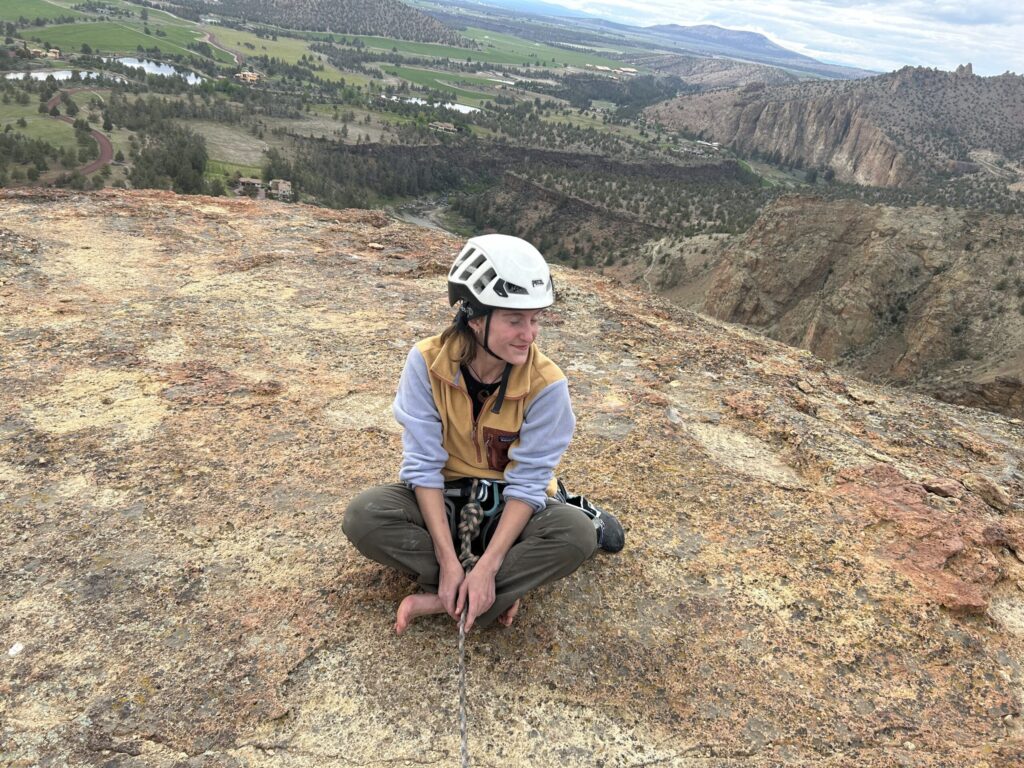
Me topped out on Pioneer Route wearing a cozy Patagonia fleece. This one has a hole burned into its sleeve from a camp stove accident that transpired years ago
Your mid-layer should not be the layer that protects you from the elements. A good fleece or puffy only needs to keep you warm, so don’t worry about finding one that’s also impervious to rain, sleet, and wind.
As a footnote: puffy and warm gear can be difficult to find vegan, so I’m linking my go-to vest here and my favorite coat here. If you’re planning to thrift something instead to save money or reduce your impact, look for Cotopaxi jackets. The majority of their older gear uses synthetic, recycled filling.
Outer/shell layer
Your outermost layer should be durable, tough, and capable of protecting you from the elements. This often looks like a windbreaker, a rain jacket, or a water and wind proof shell coat, like the kind you might wear for snow sports. I personally don’t wear this layer very often, even though I certainly should (still haven’t learned my lesson somehow).
A key aspect of the shell layer, especially on multi-day expeditions, is that it keeps your underlayers dry. Most materials lose the full strength of their heat retention properties when wet; if your puffy soaks through in a sudden downpour, it won’t keep you nearly as warm.
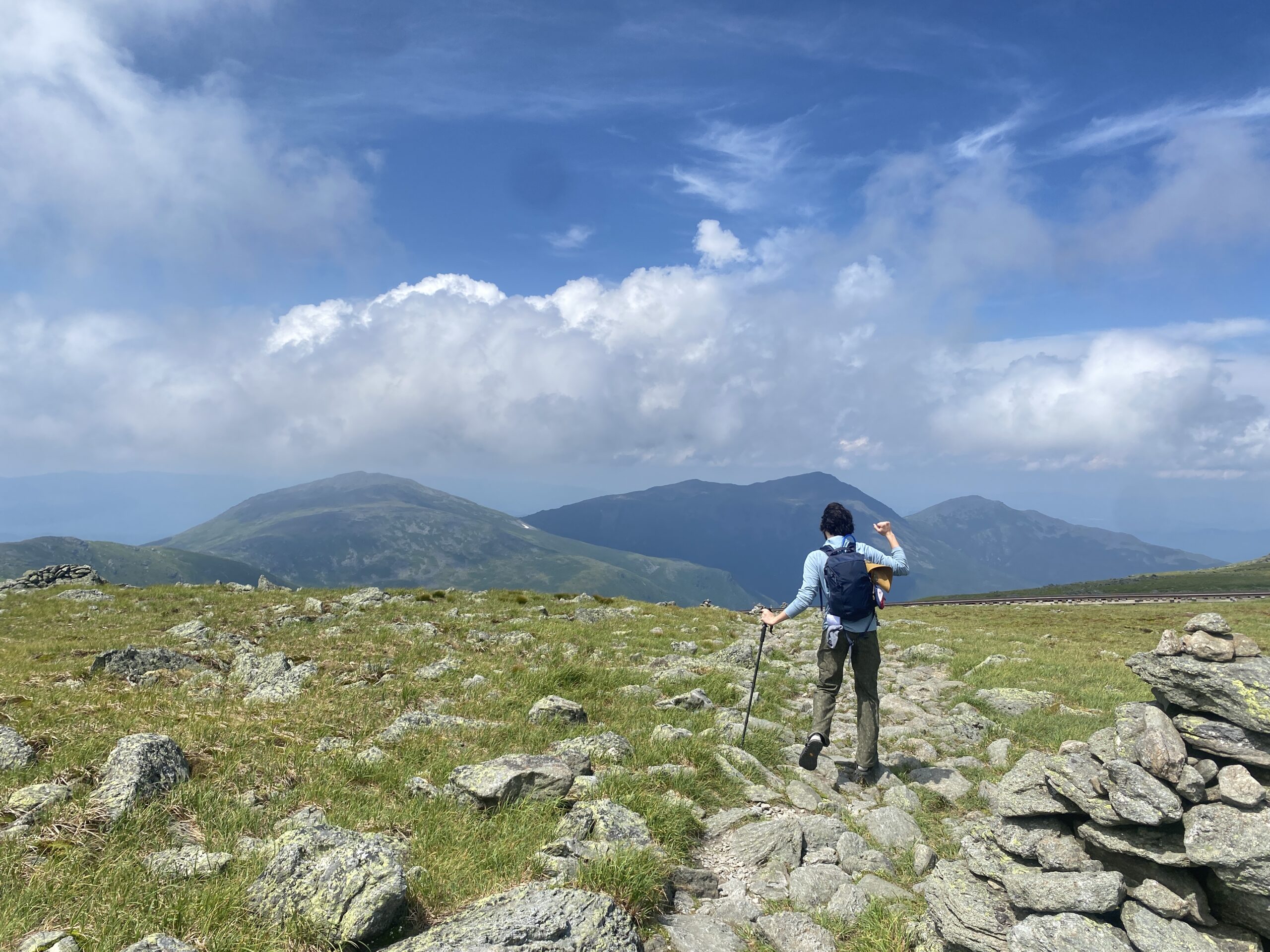
My partner Tomo in a really sick windbreaker on Lafayette Ridge in the White Mountains
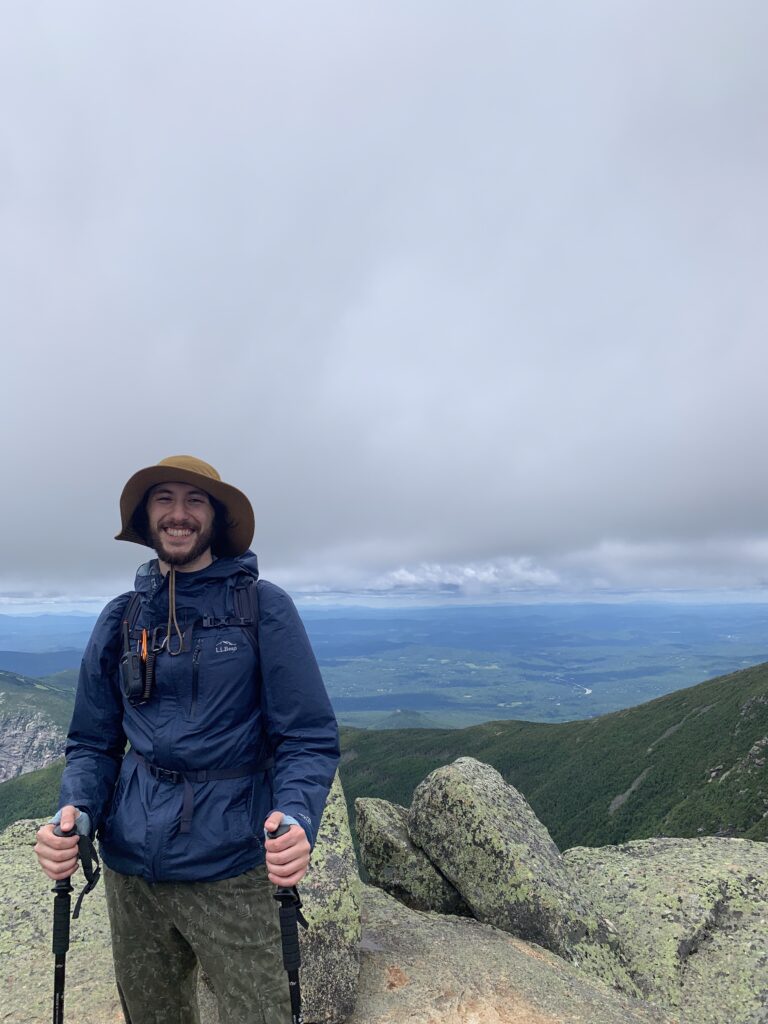
Jackets that are suitable for your outermost layer will often also have a hood to keep foul weather away from your head, neck, and face.
Don’t forget your extremities
I’ve all too often fallen victim to the mentality that I’m the first person ever to not need gloves or a hat. Spoilers: it’s not true. Both are essential. Protecting the bloodflow to your fingers can totally change the trajectory of your day, especially if you’re out climbing.
If you’re not a hat person, you also can invest in a warm headband. This is the one that I have.
As I’ve mentioned in one of my articles about footwear, wearing thick socks with tight shoes can cut off circulation to your toes. Make sure that you either have hiking shoes with a wide toe box, non-bulky socks, or both.
A note on animal welfare
Finding warm clothing for outdoor adventures can be a big challenge for vegans, and consumers who care about animals fall all over the strictness spectrum on this issue. In my personal ethical system, I only purchase clothes that are totally vegan when buying new, and will thrift wool on occasion. Here’s what I know about two of the most common insulating materials.
Down, in particular, is a complex commodity. Even though the Responsible Down Standard is a step in the right direction, down jackets would barely exist without the meat industry–down is almost exclusively harvested from birds who are being raised for slaughter. If you’re looking for an alternative, check out brands like Patagonia and Cotopaxi for great puffies with vegan and sustainably-sourced filling.
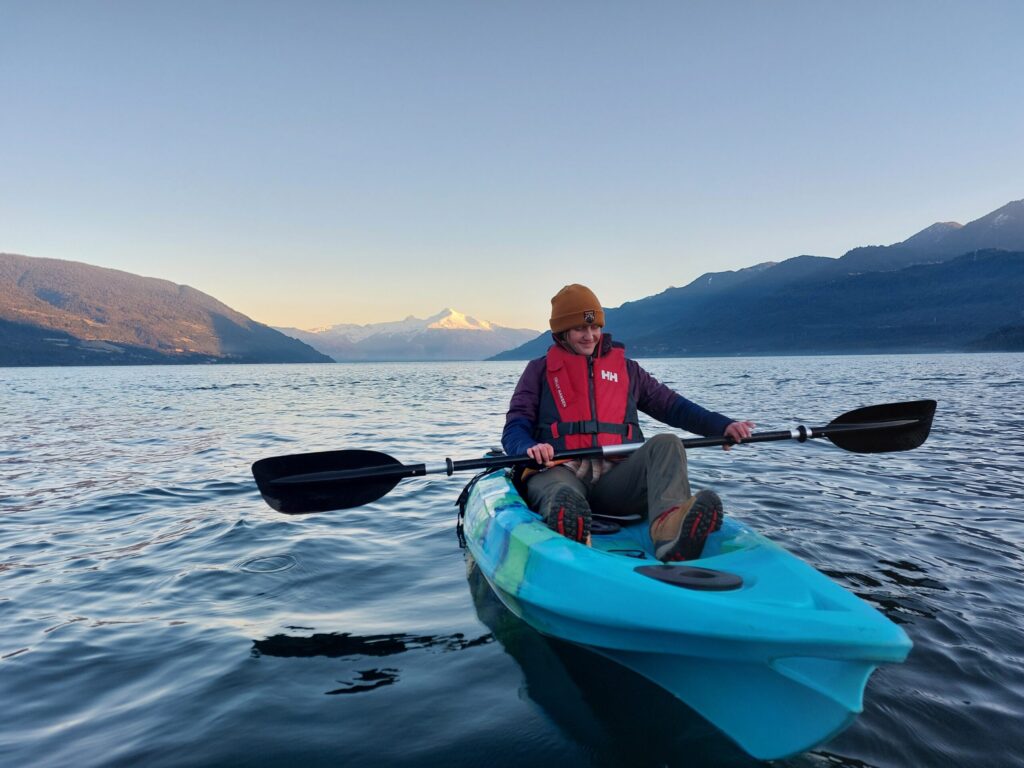
Paddling to town in Cochamó, Chile wearing a Cotopaxi puffy. Photo taken by a dear friend
Merino wool, a high-performing base layer material, exists in a grey area. This textile can be low-cruelty, but it often isn’t. Watch out for wool farms that practice mulesing or collaborate with the meat industry, both of which are more common than you might think. If you aren’t ready to abandon wool entirely and prefer a harm-reduction approach, seek out brands that adhere to the responsible wool standard. Buying only responsible wool is a great place to start, as the sheep protected by this standard are afforded a great deal more rights than other sheep, even if their lives aren’t totally free.
Conclusions
Since I had to teach myself pretty much everything I know about the outdoors, I went many years without fully understanding how to dress for cold weather–or, indeed, that there was an organized strategy at all. As time went on and cold seasons ambled by, I managed to gather an impression of what smart layering was from my wonderful friends, supremely helpful REI Co-op employees, strangers I met at the crag, and more.
As is often the goal of these little articles, the intention of this one is to help you all get out there safely and pass anything you learn along to your own found outdoors family. Community mentorship is how we all thrive (and stay warm) together.
Leave a Reply